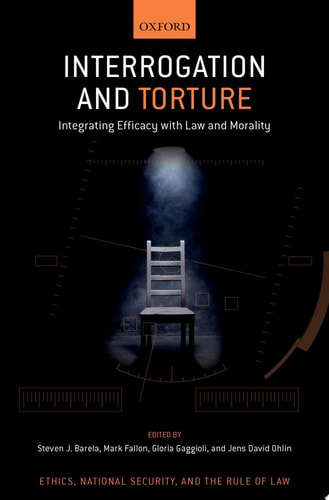
Interrogation and Torture
0
0
As an Amazon Associate and affiliate partner, Menrva Books earns from qualifying purchases. Learn more
Author Description
This Volume Addresses Interrogation And Torture At A Unique Moment. Emerging Scientific Research Reveals Non-coercive Methods To Be The Most Effective Interrogation Techniques. And Efforts Are Now Being Made To Integrate This Science And Practice Into International Law And Global Policing Initiatives. Contributors Present Cutting-edge Research On Non-coercive Interrogation Techniques And Show How This Knowledge Is Brought To Bear On The Realm Of International Law. Such Advancements Have The Potential To Transform The Conversation On Interrogation And Torture In Many Disciplines, And The Contributions In This Edited Volume Are Meant To Spark Those Discussions. Moreover, This Book Can Serve As A Guide For Policymakers Who Seek Lawful, Ethical, Human-rights Compliant--and The Most Effective--methods To Obtain Reliable Information From Those Perceived To Pose A Threat To Public Safety. To Achieve These Aims The Editors Have Brought Together Highly Experienced Practitioners And Leading Scholars In Law, Philosophy, Psychology, Neuroscience, Social Science, National Security, And Government.
Menrva's Summary
THE THESIS
This volume investigates the efficacy of non-coercive interrogation methods compared to traditional coercive practices and explores their integration into international law and global policing. The editors, a multidisciplinary team of legal scholars, practitioners, and scientists, synthesize current research from neuroscience, psychology, and philosophy to argue that rapport-based techniques yield more reliable intelligence. By bridging the gap between empirical evidence and legal frameworks, the text provides a roadmap for policymakers to align national security operations with human rights standards.
THE SCOPE MAP
What You Will Find
- Analysis of non-coercive interrogation techniques supported by recent scientific research.
- Legal frameworks for integrating human-rights-compliant methods into global policing.
- Multidisciplinary perspectives from experts in law, neuroscience, social science, and national security.
Scope Limits
- The text does not provide a comprehensive history of torture practices across all global jurisdictions.
- It does not serve as a tactical field manual for individual interrogators but rather as a policy-oriented framework.
THE AUTHORITY PERSPECTIVE
Experts highlight this volume as a significant contribution to the intersection of human rights law and intelligence gathering. Readers frequently note the academic density of the prose, which makes it a primary resource for policymakers and legal scholars interested in evidence-based security reform.
Page Count:
504
Publication Date:
2019-01-01
Publisher:
Oxford University Press
ISBN-10:
0190097531
ISBN-13:
9780190097530
Psychology
Criminology
Human rights
Law
National security
Community Tags
Similar Books