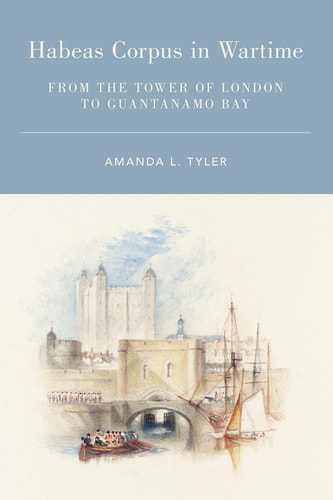
Habeas Corpus in Wartime: From the Tower of London to Guantanamo Bay
0
0
As an Amazon Associate and affiliate partner, Menrva Books earns from qualifying purchases. Learn more
Author Description
Habeas Corpus in Wartime unearths and presents a comprehensive account of the legal and political history of habeas corpus in wartime in the Anglo-American legal tradition. The book begins by tracing the origins of the habeas privilege in English law, giving special attention to the English Habeas Corpus Act of 1679, which limited the scope of executive detention and used the machinery of the English courts to enforce its terms. It also explores the circumstances that led Parliament to invent the concept of suspension as a tool for setting aside the protections of the Habeas Corpus Act in wartime. Turning to the United States, the book highlights how the English suspension framework greatly influenced the development of early American habeas law before and after the American Revolution and during the Founding period, when the United States Constitution enshrined a habeas privilege in its Suspension Clause. The book then chronicles the story of the habeas privilege and suspension over the course of American history, giving special attention to the Civil War period. The final chapters explore how the challenges posed by modern warfare during the twentieth and twenty-first centuries have placed great strain on the previously well-settled understanding of the role of the habeas privilege and suspension in American constitutional law, particularly during World War II when the United States government detained tens of thousands of Japanese American citizens and later during the War on Terror. Throughout, the book draws upon a wealth of original and heretofore untapped historical resources to shed light on the purpose and role of the Suspension Clause in the United States Constitution, revealing all along that many of the questions that arise today regarding the scope of executive power to arrest and detain in wartime are not new ones.
Menrva's Summary
THE THESIS
This book investigates the historical evolution and constitutional function of the habeas corpus privilege during periods of wartime, questioning how executive detention powers have been reconciled with legal protections across centuries. Amanda L. Tyler, a professor of law, utilizes an extensive array of primary historical documents and legal records to trace the development of the habeas privilege from its English origins to its modern application in the United States. The work argues that contemporary debates regarding executive detention are deeply rooted in long-standing legal precedents and that the Suspension Clause was designed with specific historical constraints in mind.
THE SCOPE MAP
What You Will Find
- A detailed examination of the English Habeas Corpus Act of 1679 and the invention of suspension as a legal tool.
- An analysis of the influence of English legal frameworks on the American Founding period and the drafting of the Suspension Clause.
- A chronological study of habeas corpus during the American Civil War, World War II, and the War on Terror.
- A synthesis of original historical resources used to evaluate the scope of executive power to arrest and detain individuals during national emergencies.
THE AUTHORITY PERSPECTIVE
Legal scholars and historians identify this work as a definitive account of the intersection between wartime necessity and constitutional rights. Readers frequently note the meticulous research and the clarity with which the author connects centuries-old legal traditions to modern-day detention policies.
Page Count:
464
Publication Date:
2017-12-01
Publisher:
Oxford University Press
ISBN-10:
0199856664
ISBN-13:
9780199856664
History
Law
United States
Military History
Habeas Corpus
Great Britain
Constitutional Law
Professional Career & Trade
Human rights
Community Tags
Other Editions(2)
Similar Books



Reader Comments
Share Your Thoughts
No comments yet. Be the first to share your thoughts!