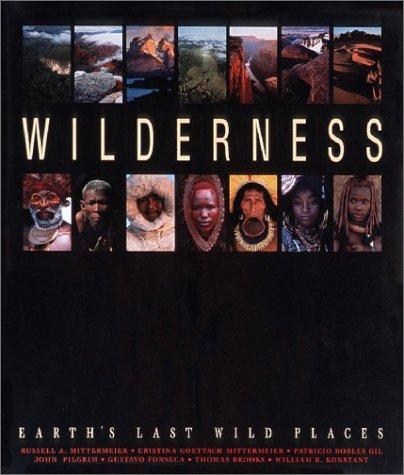
Wilderness: Earth's Last Wild Places
0
0
As an Amazon Associate and affiliate partner, Menrva Books earns from qualifying purchases. Learn more
Author Description
In this book, entitled Wilderness: Earth's Last Wild Places, we focus on the world's terrestrial wilderness areas, building on the concept of major tropical wilderness areas first defined by Mittermeier in 1988. The data presented here are the result of an analysis carried out over the past two years, mainly by Conservation International's Center for Applied Biodiversity Science (CABS) with support from its Global Conservation Fund (GCF), and involving nearly 200 specialists from all around the world, of which 125 are authors of the various chapters in this book. In addition, this volume is illustrated with over 400 beautiful photos by some of the world's most acclaimed natural photographers. In the introduction to this book, we briefly review the history of the wilderness concept, discuss its legal definitions, describe the activities of a number of organizations involved in wilderness protection, and try to develop criteria for "wilderness" based mainly on intactness, size, and human population density. In the individual chapters that follow, we provide a detailed analysis of the 37 areas that qualified for wilderness status in this study, focusing on their biodiversity, their key flagship species, their human cultures, the threats to their survival, and what is being done to conserve them.--BOOK JACKET.
Menrva's Summary
THE THESIS
This book investigates the concept and current state of Earth's remaining terrestrial wilderness areas. The data presented is the result of a two-year analysis by Conservation International's Center for Applied Biodiversity Science, involving nearly 200 specialists and 125 contributing authors. The introduction reviews the history and legal definitions of wilderness, proposes criteria for its designation, and discusses organizations involved in its protection. Subsequent chapters provide detailed analyses of 37 qualifying wilderness areas, examining their biodiversity, flagship species, human cultures, threats, and conservation efforts.
THE SCOPE MAP
- Analysis of the history and legal definitions of the wilderness concept.
- Criteria for defining wilderness based on intactness, size, and human population density.
- Detailed examination of 37 terrestrial wilderness areas.
- Focus on biodiversity and key flagship species within each area.
- Exploration of human cultures and their relationship to wilderness areas.
- Identification of threats to wilderness survival and current conservation initiatives.
- Over 400 photographs by acclaimed natural photographers.
THE AUTHORITY PERSPECTIVE
This comprehensive study, drawing on the expertise of nearly 200 specialists, offers a detailed examination of Earth's last wild places. The book builds upon the foundational concept of major tropical wilderness areas, providing an in-depth analysis of 37 specific regions. It meticulously covers biodiversity, flagship species, human cultures, and the critical threats these areas face, alongside ongoing conservation efforts. The inclusion of over 400 photographs by renowned nature photographers enhances its value as both a scientific resource and a visual exploration of these vital ecosystems.
Page Count:
576
Publication Date:
2003-01-01
ISBN-10:
9686397698
ISBN-13:
9789686397697
Photography
History
Non-Fiction
Nature
Geography
Biodiversity
Conservation
Community Tags
Similar Books