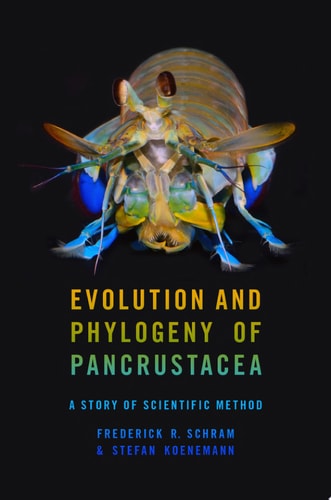
Evolution and Phylogeny of Pancrustacea: A Story of Scientific Method
0
0
As an Amazon Associate and affiliate partner, Menrva Books earns from qualifying purchases. Learn more
Author Description
The scientific understanding of arthropod phylogeny and evolution has changed significantly in recent decades. One of the most momentous alterations involved crustaceans, which are not a monophyletc group, but are part of a larger group along with insects: Pancrustacea. The old ideas surrounding crustacean evolution have served scientists well for many years; it is now time to turn toward new research by embracing the results derived from investigations conducted largely within this century. For example, new definitions have arisen from sources across several fields of study, and Frederick R. Schram and Stefan Koenemann have created a book that explores paleobiodiversity and the diversity of modern body plans. Developments within ontogenetic studies continue to generate remarkable insights into crustaceomorph evolution in regard to patterns of embryology and a revolution in the application of development genetics. Phylogeny techniques of analysis and new sources of data derived from molecular sequencing and genetic studies have forced scientists to consider new hypotheses concerning the interrelationships of all the pancrustaceans, both the crustaceomorphs and Hexapoda. Yet, some fossil groups still remain enigmatic (Thylacocephala). Despite this, research into fossils (even if incompletely understood) fills in gaps of our knowledge of paleobiodiversity, and it's useful for many things, including analyzing the origin and early evolution of Hexapoda.Evolution and Phylogeny of Pancrustacea demonstrates the use of multiple alternative hypotheses and other techniques through the well-executed presentation of diverse data sources involving Pancrustacea. Readers are left with clues to great mysteries, including the possible pathways of evolution within marine arthropods.
Menrva's Summary
THE THESIS
This book investigates the shifting scientific consensus regarding the phylogeny of arthropods, specifically the reclassification of crustaceans and insects into the monophyletic group known as Pancrustacea. Authors Frederick R. Schram and Stefan Koenemann, both established experts in crustacean biology and paleontology, utilize recent developments in molecular sequencing, developmental genetics, and fossil analysis to challenge traditional evolutionary models. The text presents a rigorous framework for evaluating competing hypotheses in light of modern data, emphasizing the necessity of integrating paleobiodiversity with contemporary genetic research.
THE SCOPE MAP
What You Will Find
- Analysis of the evolutionary relationships between crustaceomorphs and Hexapoda
- Application of developmental genetics and embryological patterns to phylogenetic study
- Examination of enigmatic fossil groups such as Thylacocephala
- Methodologies for testing multiple alternative evolutionary hypotheses
Scope Limits
- Does not provide an exhaustive catalog of every known arthropod species
- Does not resolve all taxonomic uncertainties regarding extinct or poorly understood fossil groups
THE AUTHORITY PERSPECTIVE
Experts recognize this work as a significant synthesis of modern phylogenetic techniques and their application to arthropod evolution. Readers frequently note the technical density of the prose, which is intended for researchers and advanced students in the biological sciences.
Page Count:
839
Publication Date:
2021-01-01
Publisher:
Oxford University Press
ISBN-10:
0190095989
ISBN-13:
9780190095987
Science
Biology
Paleontology
Phylogenetics
Crustacea
Zoology
Entomology
Evolutionary Biology
Evolution
Community Tags
Similar Books