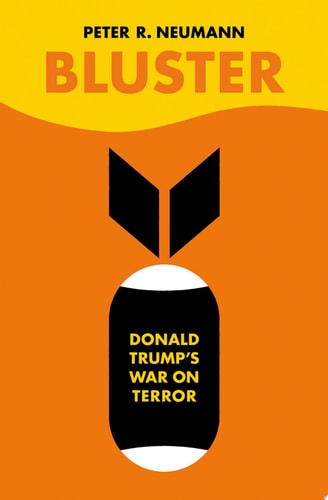
Bluster: Donald Trump's War on Terror
0
0
As an Amazon Associate and affiliate partner, Menrva Books earns from qualifying purchases. Learn more
Author Description
Defeating terrorism was one of Donald Trump's key campaign promises. But there is no easy way to make sense of Donald Trump's war on terror. Is it all bluster, aimed at mobilising his base, or does it represent a genuine shift from previous administrations?Since Trump took office, American counterterrorism has become more militaristic and less interested in causes and consequences. Relationships with foreign partners have deteriorated and right-wing extremists feel powerful and emboldened. The most significant change of paradigm-the conflation of terrorism, immigration, and Islam-has not just resulted in costly failures, such as the "Muslim ban," but also undermined the trust of immigrant communities and multiculturalism in the US.In Bluster, Peter Neumann assesses Trump's approach to countering terrorism, and argues that his war on terror looks strong and powerful in the short term, but will cause damage over time. The president has not just failed to provide a strategic framework for defeating terrorism; his entire approach has made the world less safe and undermined America's greatest 'soft power' asset-the very idea of America.
Menrva's Summary
THE THESIS
This book investigates whether Donald Trump's counterterrorism strategy represents a substantive policy shift or merely performative rhetoric designed to mobilize his political base. Peter R. Neumann, a professor of Security Studies and expert on radicalization, utilizes an analysis of administrative policy changes, diplomatic shifts, and public discourse to argue that the Trump administration's approach prioritized short-term optics over long-term strategic stability. The author contends that this methodology ultimately eroded American soft power and compromised international security frameworks.
THE SCOPE MAP
What You Will Find
- Analysis of the conflation between immigration policy, Islam, and domestic terrorism.
- Evaluation of the deterioration of traditional foreign intelligence and security partnerships.
- Examination of the rise in domestic right-wing extremism during the administration.
Scope Limits
- The text does not provide a comprehensive history of American counterterrorism prior to 2017.
- The analysis focuses primarily on the strategic and geopolitical implications rather than granular tactical military operations.
THE AUTHORITY PERSPECTIVE
Experts and political analysts frequently cite this work as a critical examination of the intersection between populist rhetoric and national security policy. Readers often note the author's ability to synthesize complex geopolitical shifts into a coherent critique of modern executive decision-making.
Page Count:
160
Publication Date:
2020-01-01
Publisher:
Oxford University Press
ISBN-10:
0190099941
ISBN-13:
9780190099947
National security
American Politics
International relations
Current Affairs
United States
Counterterrorism
Community Tags
Similar Books