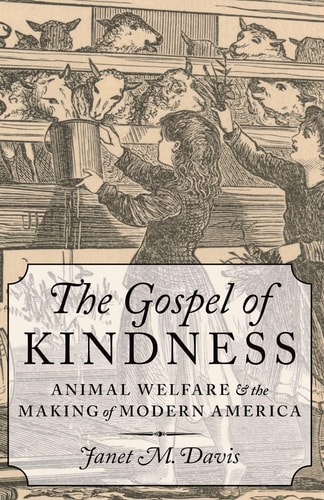
The Gospel of Kindness
0
0
As an Amazon Associate and affiliate partner, Menrva Books earns from qualifying purchases. Learn more
Author Description
When we consider modern American animal advocacy, we often think of veganism, no-kill shelters, Internet campaigns against trophy hunting, or celebrities declaring that they would "rather go naked" than wear fur. Contemporary critics readily dismiss animal protectionism as a modern secular movement that privileges animals over people. Yet the movement's roots are deeply tied to the nation's history of religious revivalism and social reform.In The Gospel of Kindness, Janet M. Davis explores the broad cultural and social influence of the American animal welfare movement at home and overseas from the Second Great Awakening to the Second World War. Dedicated primarily to laboring animals at its inception in an animal-powered world, the movement eventually included virtually all areas of human and animal interaction. Embracing animals as brethren through biblical concepts of stewardship, a diverse coalition of temperance groups, teachers, Protestant missionaries, religious leaders, civil rights activists, policy makers, and anti-imperialists forged an expansive transnational "gospel of kindness," which defined animal mercy as a signature American value. Their interpretation of this "gospel" extended beyond the New Testament to preach kindness as a secular and spiritual truth. As a cultural product of antebellum revivalism, reform, and the rights revolution of the Civil War era, animal kindness became a barometer of free moral agency, higher civilization, and assimilation. Yet given the cultural, economic, racial, and ethnic diversity of the United States, its empire, and other countries of contact, standards of kindness and cruelty were culturally contingent and potentially controversial. Diverse constituents defended specific animal practices, such as cockfighting, bullfighting, songbird consumption, and kosher slaughter, as inviolate cultural traditions that reinforced their right to self-determination. Ultimately, American animal advocacy became a powerful humanitarian ideal, a touchstone of inclusion and national belonging at home and abroad that endures to this day.
Menrva's Summary
THE THESIS
This book investigates the historical origins and cultural evolution of the American animal welfare movement from the Second Great Awakening through the Second World War. Janet M. Davis, a historian, utilizes extensive archival research to argue that animal advocacy was not merely a secular modern development but a movement deeply rooted in religious revivalism and social reform. She posits that the concept of a 'gospel of kindness' served as a moral barometer for American identity, civilization, and social progress during a period of significant national expansion.
THE SCOPE MAP
What You Will Find
- Historical analysis of the American animal welfare movement from the 19th century to the mid-20th century.
- Exploration of the intersection between animal advocacy and social movements like temperance, civil rights, and anti-imperialism.
- Examination of how animal welfare standards were used to define 'civilization' and moral agency.
Scope Limits
- The text focuses primarily on the American context and its transnational influence, rather than a global history of animal rights.
- It does not provide a comprehensive guide to modern animal rights activism or contemporary legal frameworks.
THE AUTHORITY PERSPECTIVE
Historians and scholars of American social reform recognize this work as a significant contribution to understanding the religious and cultural underpinnings of animal advocacy. Readers frequently note the academic rigor and the depth of historical context provided regarding the movement's complex relationship with cultural diversity and imperialism.
Page Count:
320
Publication Date:
2019-11-15
Publisher:
Oxford University Press
ISBN-10:
0190092440
ISBN-13:
9780190092443
History
Social Science
Cultural History
American History
Animal Welfare
Community Tags
Similar Books