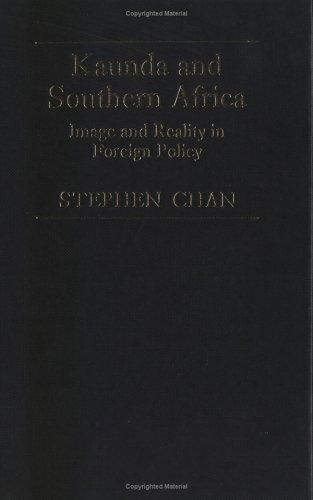
Kaunda and Southern Africa
0
0
As an Amazon Associate and affiliate partner, Menrva Books earns from qualifying purchases. Learn more
Author Description
This book examines the former Zambian President Kenneth Kaunda's political philosophy and practice, and considers the conflicting views of the man and his policies - moralist or collaborator with South Africa, practitioner of realpolitik or promoter of peace. The author compares Kaunda with Mugabe, and assesses their respective contribution to the fight against apartheid in South Africa as well as the general effect of their policies on the region. The author also considers the moves towards multi-party democracy in Zambia which eventually led to Kaunda's removal from office.
Menrva's Summary
THE THESIS
This book investigates the complex legacy of Kenneth Kaunda, former President of Zambia, exploring the dichotomy between his image as a moralist and his actions as a political pragmatist. Stephen Chan, a noted scholar of African politics, draws upon extensive research and comparative analysis to dissect Kaunda's political philosophy and its impact on Southern Africa during the apartheid era and beyond. The work critically examines Kaunda's role in the anti-apartheid struggle, his regional policies, and the eventual transition to multi-party democracy in Zambia that led to his downfall.
THE SCOPE MAP
- Analysis of Kenneth Kaunda's political philosophy and practice.
- Examination of conflicting views on Kaunda: moralist vs. collaborator, realpolitik vs. peace promoter.
- Comparative study of Kaunda and Robert Mugabe's contributions to the fight against apartheid.
- Assessment of the impact of their policies on the Southern African region.
- Consideration of the moves towards multi-party democracy in Zambia and Kaunda's removal from office.
THE AUTHORITY PERSPECTIVE
This work is recognized for its nuanced examination of Kenneth Kaunda's presidency and his role in Southern African politics. Stephen Chan's comparative approach, contrasting Kaunda with Mugabe, offers a valuable perspective on the anti-apartheid struggle and regional dynamics. The book is noted for its detailed analysis of Kaunda's political philosophy and the internal political shifts in Zambia that led to his departure from power. It provides a critical assessment of a pivotal figure in post-colonial African history.
Page Count:
231
Publication Date:
1992-01-01
ISBN-10:
1850434905
Non-Fiction
Biography
Politics
History
Community Tags
Similar Books














