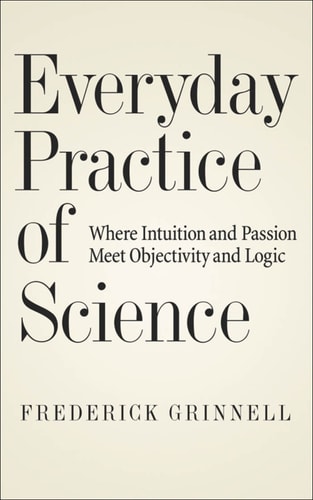
Everyday Practice of Science: Where Intuition and Passion Meet Objectivity and Logic
0
0
As an Amazon Associate and affiliate partner, Menrva Books earns from qualifying purchases. Learn more
Author Description
Scientific facts can be so complicated that only specialists in a field fully appreciate the details, but the nature of everyday practice that gives rise to these facts should be understandable by everyone interested in science. This book describes how scientists bring their own interests and passions to their work, illustrates the dynamics between researchers and the research community, and emphasizes a contextual understanding of science in place of the linear model found in textbooks with its singular focus on "scientific method."Everyday Practice of Science also introduces readers to issues about science and society. Practice requires value judgments: What should be done? Who should do it? Who should pay for it? How much? Balancing scientific opportunities with societal needs depends on appreciating both the promises and the ambiguities of science. Understanding practice informs discussions about how to manage research integrity, conflict of interest, and the challenge of modern genetics to human research ethics. Society cannot have the benefits of research without the risks. The last chapter contrasts the practices of science and religion as reflective of two different types of faith and describes a holistic framework within which they dynamically interact.
Menrva's Summary
THE THESIS
This book investigates the gap between the idealized linear model of the scientific method and the actual, human-driven practice of scientific research. Frederick Grinnell, a professor of cell biology and researcher, draws upon his extensive experience in laboratory settings to argue that science is a social, value-laden activity. He posits that by understanding the motivations, passions, and ethical dilemmas of individual scientists, the public can better engage with the complexities of modern research and its societal implications.
THE SCOPE MAP
What You Will Find
- A critique of the traditional, linear scientific method as presented in academic textbooks.
- An analysis of the interplay between individual researcher passion and community-based objectivity.
- Discussions on research integrity, conflict of interest, and the ethics of modern genetic research.
- A comparative framework examining the distinct roles of faith in both scientific and religious practices.
THE AUTHORITY PERSPECTIVE
Experts and educators frequently cite this work as a vital resource for demystifying the day-to-day realities of laboratory life for students and the general public. Readers often note that the prose is accessible yet intellectually rigorous, providing a necessary humanistic counterpoint to purely technical accounts of scientific discovery.
Page Count:
246
Publication Date:
2008-01-01
Publisher:
Oxford University Press
ISBN-10:
019987915X
ISBN-13:
9780199879151
Science
Non-Fiction
Science
Allied Health
Medical
Research Ethics
Sociology of Science
Community Tags
Similar Books