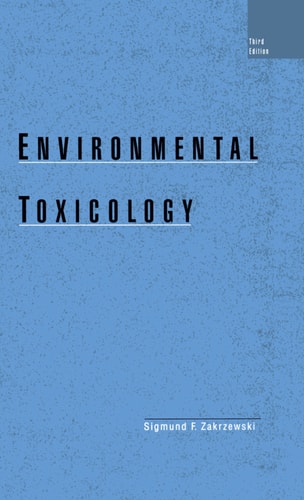
Environmental Toxicology
0
0
As an Amazon Associate and affiliate partner, Menrva Books earns from qualifying purchases. Learn more
Author Description
The fundamental principles of environmental toxicology are clearly presented here for university students and professionals in related fields. This book consists of two parts. In the first part basic metabolic, physiological, and pharmacological concepts are used to explain the fate of toxic chemicals in the body, with emphasis on carcinogenesis and mutagenesis. This part also contains a chapter on chemicals disrupting the endocrine system and a chapter on risk assessment and the precautionary principle. The second section deals with specific environmental problems - air pollution, alteration of the earth's atmosphere, water and land pollution, including sections on wetlands, organic agriculture and genetically modified crops. It also deals with health and environmental effects of ionized radiation, and the effect of a rapid population growth on the environmental and human welfare. Chapter on pollution control and regulatory policies are also included.
Menrva's Summary
THE THESIS
This text investigates the fundamental principles of environmental toxicology and the mechanisms by which chemical agents impact biological systems and global ecosystems. The author, Sigmund F. Zakrzewski, utilizes a framework grounded in metabolic, physiological, and pharmacological science to bridge the gap between chemical exposure and environmental health outcomes. The work synthesizes complex data regarding carcinogenesis, mutagenesis, and regulatory policy to provide a comprehensive overview for students and practitioners.
THE SCOPE MAP
What You Will Find
- Metabolic and physiological pathways of toxic chemicals in the human body
- Analysis of endocrine-disrupting chemicals and risk assessment methodologies
- Examination of air, water, and land pollution alongside atmospheric changes
- Discussions on ionized radiation, population growth, and regulatory control policies
Scope Limits
- The text does not provide exhaustive clinical diagnostic protocols for individual toxicological cases
- It does not focus on localized industrial remediation engineering beyond general policy frameworks
THE AUTHORITY PERSPECTIVE
Experts and educators frequently cite this work as a foundational text for university-level environmental science curricula. Readers often note the clarity of the prose, which effectively organizes dense scientific concepts for both students and professionals in the field.
Page Count:
352
Publication Date:
2002-01-01
Publisher:
Oxford University Press
ISBN-10:
0190287381
ISBN-13:
9780190287382
Science
Public Health
Pollution Control
Trades & Technology
Toxicology
Medical
Safety & Health
Ecology
Allied Health
Community Tags
Other Editions(3)
Similar Books