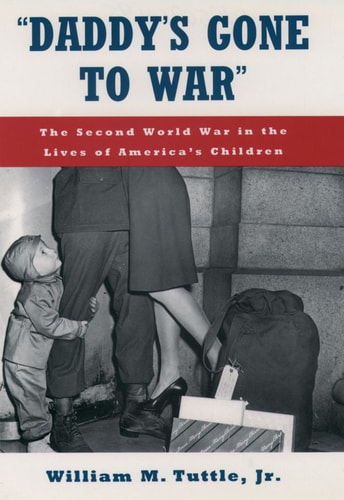
Daddy's Gone to War: The Second World War in the Lives of America's Children
0
0
As an Amazon Associate and affiliate partner, Menrva Books earns from qualifying purchases. Learn more
Author Description
Looking out a second-story window of her family's quarters at the Pearl Harbor naval base on December 7, 1941, eleven-year-old Jackie Smith could see not only the Rising Sun insignias on the wings of attacking Japanese bombers, but the faces of the pilots inside. Most American children on the home front during the Second World War saw the enemy only in newsreels and the pages of Life Magazine, but from Pearl Harbor on, "the war"--with its blackouts, air raids, and government rationing--became a dramatic presence in all of their lives. Thirty million Americans relocated, 3,700,000 homemakers entered the labor force, sparking a national debate over working mothers and latchkey children, and millions of enlisted fathers and older brothers suddenly disappeared overseas or to far-off army bases. By the end of the war, 180,000 American children had lost their fathers. In "Daddy's Gone to War", William M. Tuttle, Jr., offers a fascinating and often poignant exploration of wartime America, and one of generation's odyssey from childhood to middle age. The voices of the home front children are vividly present in excerpts from the 2,500 letters Tuttle solicited from men and women across the country who are now in their fifties and sixties. From scrap-collection drives and Saturday matinees to the atomic bomb and V-J Day, here is the Second World War through the eyes of America's children. Women relive the frustration of always having to play nurses in neighborhood war games, and men remember being both afraid and eager to grow up and go to war themselves. (Not all were willing to wait. Tuttle tells of one twelve year old boy who strode into an Arizona recruiting office and declared, "I don't need my mother's consent...I'm a midget.") Former home front children recall as though it were yesterday the pain of saying good-bye, perhaps forever, to an enlisting father posted overseas and the sometimes equally unsettling experience of a long-absent father's return. A pioneering effort.
Menrva's Summary
THE THESIS
This book investigates how the Second World War fundamentally reshaped the daily lives, social development, and collective memory of American children on the home front. William M. Tuttle, Jr., a historian specializing in American social history, utilizes an extensive archive of primary source material to examine the domestic impact of global conflict. He argues that the war served as a defining catalyst for a generation, altering family structures, labor dynamics, and the psychological landscape of youth during the 1940s.
THE SCOPE MAP
What You Will Find
- Analysis of the social consequences of mass relocation and the entry of mothers into the wartime labor force.
- Examination of the psychological impact of absent fathers and the subsequent challenges of family reintegration post-war.
- Primary source evidence derived from over 2,500 letters and personal accounts from individuals who were children during the conflict.
- Documentation of the cultural influence of wartime media, rationing, and patriotic activities on the youth experience.
THE AUTHORITY PERSPECTIVE
Historians and scholars frequently cite this work as a foundational text for understanding the domestic front during the Second World War. Readers note the impressive depth of the archival research, which provides a unique, bottom-up perspective on a period often dominated by military and political narratives.
Page Count:
384
Publication Date:
1993-01-01
Publisher:
Oxford University Press
ISBN-10:
019987882X
ISBN-13:
9780199878826
History
Childhood Studies
Social History
American History
Military History
Community Tags
Similar Books