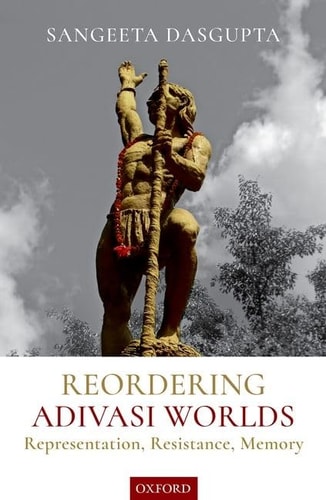
Reordering Adivasi Worlds: Representation, Resistance, Memory
0
0
As an Amazon Associate and affiliate partner, Menrva Books earns from qualifying purchases. Learn more
Author Description
Recounting the story of the Oraons and Tana Bhagats of Chhotanagpur in the present-day state of Jharkhand, this book questions postcolonial understandings of the category of 'tribe' and unravels the threads of a hierarchical adivasi world. It unpacks colonial ethnography, missionary narratives, and anthropological writings; explores issues of adivasi identity and resistance; and demonstrates how contemporary adivasi protest draws upon memoriesof the past. Dasgupta argues that nineteenth and early twentieth-century ideas of 'tribe' were not abstract imaginaries but structured colonial interventions. These affected the shaping of customary rights; the understanding of the rural world; and the perception of customs and practices. She analyses the ways in which Tana Bhagats questioned hierarchies among the Oraons; opposed landlords, moneylenders, and the colonial state; and engagedwith Gandhi and the Congress. Dasgupta delineates how Tanas allude to their diverse experiences and distinctive memories to negotiate with the sarkar even today.Using colonial archives, oral narratives, and contemporary pamphlets, this book examines the contending 'truths' produced around adivasi protest, and the complex interplay between the past and the present, the oral and the written.
Menrva's Summary
THE THESIS
This book investigates how colonial categorizations of the 'tribe' shaped the socio-political realities and resistance movements of the Oraons and Tana Bhagats in Chhotanagpur. Dr. Sangeeta Dasgupta, a scholar of modern Indian history, utilizes a multidisciplinary approach to challenge postcolonial interpretations of indigenous identity. By synthesizing colonial archives with oral histories, she argues that nineteenth and early twentieth-century definitions of 'tribe' were active, structured interventions that fundamentally altered customary rights and rural power dynamics.
THE SCOPE MAP
What You Will Find
- Analysis of colonial ethnography, missionary records, and anthropological texts regarding the Oraons and Tana Bhagats.
- Examination of the Tana Bhagat movement's engagement with the colonial state, landlords, and the Indian National Congress.
- Methodology integrating archival research with contemporary oral narratives and political pamphlets.
Scope Limits
- The study is geographically and culturally focused on the Chhotanagpur region and does not provide a comprehensive survey of all Adivasi groups in India.
- The text prioritizes the specific historical trajectory of the Oraons and Tana Bhagats over broader comparative indigenous studies.
THE AUTHORITY PERSPECTIVE
Scholars in the field of South Asian history recognize this work as a rigorous critique of colonial knowledge production and its enduring impact on indigenous identity. Readers frequently note the academic density of the prose and the author's meticulous use of primary source materials to reconstruct subaltern memory.
Page Count:
368
Publication Date:
2023-01-01
Publisher:
Oxford University Press
ISBN-10:
0190127910
ISBN-13:
9780190127916
History
Asia history
Anthropology
India
Sociology
Community Tags
Similar Books