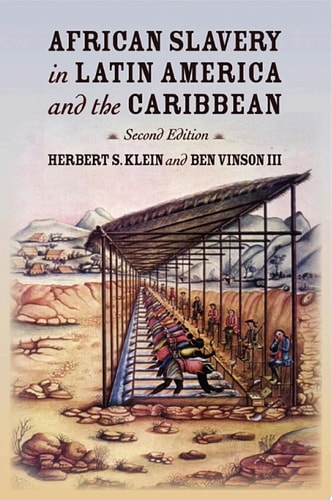
African Slavery in Latin America and the Caribbean
0
0
As an Amazon Associate and affiliate partner, Menrva Books earns from qualifying purchases. Learn more
Author Description
This is an original survey of the economic and social history of slavery of the Afro-American experience in Latin America and the Caribbean. The focus of the book is on the Portuguese, Spanish, and French-speaking regions of continental America and the Caribbean. It analyzes the latest research on urban and rural slavery and on the African and Afro-American experience under these regimes. It approaches these themes both historically and structurally. The historical section provides a detailed analysis of the evolution of slavery and forced labor systems in Europe, Africa, and America. The second half of the book looks at the type of life and culture which the salves experienced in these American regimes.The first part of the book describes the growth of the plantation and mining economies that absorbed African slave labor, how that labor was used, and how the changing international economic conditions affected the local use and distribution of the slave labor force. Particular emphasis is given to the evolution of the sugar plantation economy, which was the single largest user of African slave labor and which was established in almost all of the Latin American colonies.Once establishing the economic context in which slave labor was applied, the book shifts focus to the Africans and Afro-Americans themselves as they passed through this slave regime. The first part deals with the demographic history of the slaves, including their experience in the Atlantic slave trade and their expectations of life in the New World. The next part deals with the attempts of the African and American born slaves to create a viable and autonomous culture. This includes their adaptation of European languages, religions, and even kinship systems to their own needs. It also examines systems of cooptation and accommodation to the slave regime, as well as the type and intensity of slave resistances and rebellions.A separate chapter is devoted to the important and different role of the free col
Menrva's Summary
THE THESIS
This book investigates the economic and social structures of African slavery within Latin American and Caribbean colonial regimes. Authors Ben Vinson III and Herbert S. Klein utilize a synthesis of historical data and structural analysis to examine how plantation and mining economies shaped the lives of enslaved populations. By tracing the evolution of forced labor from Europe and Africa to the Americas, the authors provide a comprehensive framework for understanding the demographic and cultural realities of the Afro-American experience.
THE SCOPE MAP
What You Will Find
- Analysis of plantation and mining economies across Portuguese, Spanish, and French-speaking regions.
- Demographic history of the Atlantic slave trade and life expectancy in the New World.
- Examination of cultural adaptation, including language, religion, and kinship systems.
- Documentation of slave resistance, rebellion, and the role of free populations of color.
THE AUTHORITY PERSPECTIVE
Scholars and students of history frequently cite this work as a foundational survey for understanding the comparative development of slavery in the Americas. Experts highlight the text for its balanced approach in integrating broad economic trends with the lived experiences of enslaved individuals.
Page Count:
306
Publication Date:
2007-01-01
Publisher:
Oxford University Press
ISBN-10:
0199885028
ISBN-13:
9780199885022
History
Economic History
American History
West Indies
Caribbean Area
Social History
Slavery
Community Tags
Similar Books