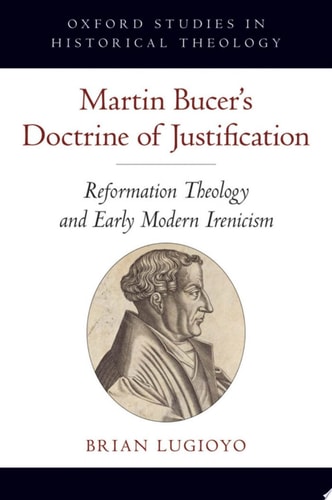
Martin Bucer's Doctrine of Justification: Reformation Theology and Early Modern Irenicism
0
0
As an Amazon Associate and affiliate partner, Menrva Books earns from qualifying purchases. Learn more
Author Description
Martin Bucer has usually been portrayed as a diplomat who attempted to reconcile divergent theological views, sometimes at any cost, or as a pragmatic pastor who was more concerned with ethics than theology. These representations have led to the view that Bucer was a theological light-weight, rightly placed in the shadow of Luther and Calvin. This book makes a different argument. Bucer was an ecclesial diplomat and a pragmatic pastor, yet his ecclesial and practical approaches to reforming the Church were guided by coherent theological convictions. Central to his theology was his understanding of the doctrine of justification, an understanding that Brian Lugioyo argues has an integrity of its own, though it has been imprecisely represented as intentionally conciliatory. It was this solid doctrine that guided Bucer's irenicism and acted as a foundation for his entrance into discussions with Catholics between 1539 and 1541. Lugioyo demonstrates that Bucer was consistent in his approach and did not sacrifice his theological convictions for ecclesial expediency. Indeed his understanding was an accepted evangelical perspective on justification, one to be commended along with those of Luther and Calvin.
Menrva's Summary
THE THESIS
This book investigates whether Martin Bucer’s reputation as a theological lightweight is accurate, or if his efforts toward reconciliation were actually grounded in a robust and consistent doctrine of justification. Brian Lugioyo, a scholar of historical theology, examines Bucer’s writings and historical context to challenge the long-standing perception that Bucer prioritized diplomatic expediency over theological integrity. By analyzing Bucer’s contributions alongside those of Luther and Calvin, Lugioyo argues that Bucer’s irenicism was a direct product of his specific theological convictions rather than a compromise of them.
THE SCOPE MAP
What You Will Find
- An analysis of the doctrine of justification within the context of 16th-century Reformation theology.
- A historical examination of Bucer’s diplomatic engagements with Catholic representatives between 1539 and 1541.
- A comparative study of Bucer’s theological framework against the established views of Martin Luther and John Calvin.
- Evidence derived from primary source documents and historical theological treatises to support the argument for Bucer's consistency.
THE AUTHORITY PERSPECTIVE
Scholars and historians of the Reformation period frequently cite this work as a necessary correction to the traditional historiography surrounding Bucer. Readers often note the academic density of the prose, which serves as a foundational text for those studying the nuances of early modern irenicism and ecclesial diplomacy.
Page Count:
270
Publication Date:
2010-01-01
Publisher:
Oxford University Press
ISBN-10:
0199889023
ISBN-13:
9780199889020
Religion
Biography
History
Church History
Reformation
Theology
Christianity
Community Tags
Similar Books