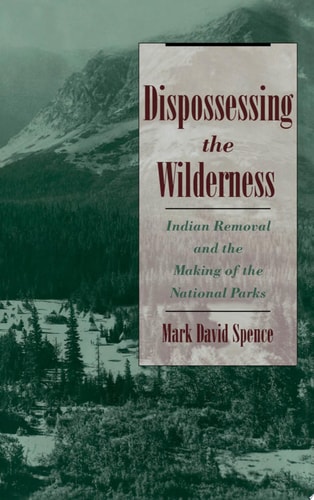
Dispossessing the Wilderness: Indian Removal and the Making of the National Parks
0
0
As an Amazon Associate and affiliate partner, Menrva Books earns from qualifying purchases. Learn more
Author Description
National parks like Yellowstone, Yosemite, and Glacier preserve some of this country's most cherished wilderness landscapes. While visions of pristine, uninhabited nature led to the creation of these parks, they also inspired policies of Indian removal. By contrasting the native histories of these places with the links between Indian policy developments and preservationist efforts, this work examines the complex origins of the national parks and the troubling consequences of the American wilderness ideal. The first study to place national park history within the context of the early reservation era, it details the ways that national parks developed into one of the most important arenas of contention between native peoples and non-Indians in the twentieth century.
Menrva's Summary
THE THESIS
This work investigates the historical paradox wherein the creation of American national parks necessitated the systematic removal and exclusion of indigenous populations from their ancestral lands. Mark David Spence, a historian specializing in the American West, utilizes archival records and federal policy documents to argue that the 'wilderness ideal' was a constructed concept used to justify the displacement of native peoples. By situating park development within the broader context of the reservation era, the author demonstrates how preservationist policies functioned as a mechanism of colonial control.
THE SCOPE MAP
What You Will Find
- Historical analysis of the early reservation era and its intersection with federal land management policies.
- Case studies of major national parks including Yellowstone, Yosemite, and Glacier.
- Examination of the ideological shift from indigenous land stewardship to the concept of uninhabited wilderness.
- Documentation of the twentieth-century legal and social conflicts between native tribes and park authorities.
THE AUTHORITY PERSPECTIVE
Scholars and historians frequently cite this work as a foundational text for understanding the intersection of environmental policy and indigenous rights. Readers often note the rigorous archival research and the clarity with which the author challenges traditional narratives regarding the origins of the American national park system.
Page Count:
200
Publication Date:
1999-01-01
Publisher:
Oxford University Press
ISBN-10:
0199880689
ISBN-13:
9780199880683
History
Sociology
Nature conservation
American History
Land tenure
Ethnic Studies
Earth Sciences
Wilderness areas
Environmental History
North America
Community Tags
Similar Books