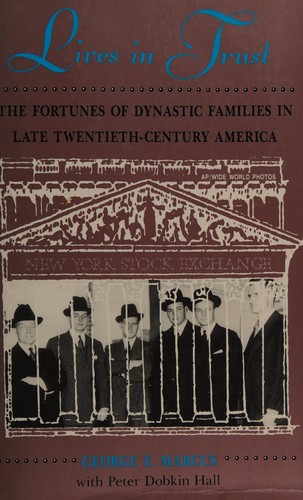
Lives in Trust
0
0
As an Amazon Associate and affiliate partner, Menrva Books earns from qualifying purchases. Learn more
Author Description
The histories of great American dynastic fortunes, such as those of the Rockefellers, DuPonts, and Guggenheims, have been told repeatedly as family stories. They have been tales of the passions, jealousies, distinguished achievements, and eccentricities among generations of parents and children, brothers and sisters. The essays in this book, developed from the perspectives of contemporary anthropology and cultural studies, establish a different field of vision for understanding private concentrations of great wealth and their legacies in the late twentieth-century United States. Over time, a family becomes dynastic by growing into an organization with a massive store of wealth rather than kinship at its center. A dynasty then takes on a set of values and a mystique that depends on a diverse range of experts, institutions, mass media, and ordinary middle-class people to empower it. The mature dynasty is as much the sum of complex interests in the culture and production of wealth as it is the story of the prominent family at its origins. This volume examines the full range of interests in the perpetuation of a dynasty and provides a clearer picture of the long-term cultural legacies of such capitalist clans. Ultimately, Marcus and Hall address the question of what makes diversely involved and situated descendants adhere to their ancestral code of family authority, and their answers are fully informed by an understanding of the more complex organization of dynastic culture and wealth. A family story in itself cannot encompass the workings of a mature fortune, because the power and roles of descendants are so often subordinated to the institutional legacies and myths of celebrity that engulf them. The research for this book includes ethnographic studies of old family fortunes in Gulf Coast Texas as well as archival work and actual experience within high-culture philanthropic institutions created by dynastic fortunes. The Getty and Rockefeller legacies are given specia
Menrva's Summary
THE THESIS
This book re-examines the nature of American dynastic fortunes by shifting the focus from family sagas to the complex organizational and cultural systems that sustain them. The essays, drawing on contemporary anthropology and cultural studies, argue that mature dynasties are defined by their vast wealth and the institutions they create, rather than solely by kinship ties. These dynasties rely on a diverse network of experts, organizations, media, and the public to maintain their power and mystique. The book explores the intricate web of interests involved in perpetuating a dynasty and the cultural legacies they leave behind, questioning what compels descendants to adhere to ancestral codes of authority when institutional legacies and celebrity myths often overshadow individual roles.
THE SCOPE MAP
- Analysis of dynastic fortunes through the lens of contemporary anthropology and cultural studies.
- Exploration of how families transform into organizations centered on wealth rather than kinship.
- Examination of the role of experts, institutions, mass media, and the public in empowering dynasties.
- Discussion of the values and mystique that surround mature dynastic wealth.
- Investigation into the cultural legacies of capitalist clans.
- Ethnographic studies of old family fortunes in Gulf Coast Texas.
- Archival work and experience within philanthropic institutions founded by dynastic fortunes.
- Specific examination of the Getty and Rockefeller legacies.
THE AUTHORITY PERSPECTIVE
The book offers a novel anthropological and cultural studies perspective on the formation and perpetuation of American dynastic wealth, moving beyond traditional family narrative approaches. It posits that these dynasties evolve into complex organizations where wealth and institutional structures become paramount, supported by a broad cultural ecosystem. The research incorporates ethnographic data and institutional analysis to provide a nuanced understanding of how such fortunes endure and shape cultural legacies. The work aims to illuminate the intricate mechanisms that bind descendants to ancestral authority within the context of modern dynastic culture.
Page Count:
380
Publication Date:
1992-01-01
ISBN-10:
0813304644
Science
History
Non-Fiction
Sociology
Anthropology
Business History
Community Tags
Similar Books