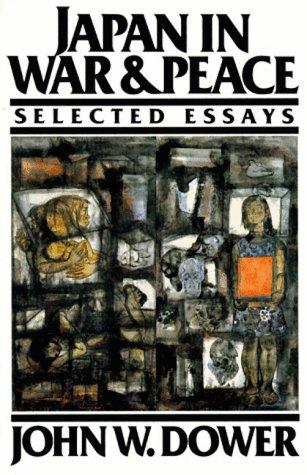
Japan in War and Peace
0
0
As an Amazon Associate and affiliate partner, Menrva Books earns from qualifying purchases. Learn more
Author Description
More than any historian of his generation, John Dower has changed the way we view our relations with Japan. In his prize-winning War Without Mercy, Dower showed the depth of the racial antagonism that gave the war in the Pacific its particularly violent and brutal tone. In Japan in War and Peace, he examines unexplored continuities and connections in Japanese politics, economics, and society at large. Drawing on decades of experience and research, Dower highlights resemblances between wartime, postwar, and contemporary Japan. He argues persuasively that the origins of many of the institutions responsible for Japan's dominant position in today's global economy derive from the rapid military industrialization of the 1930s and not from the post-Occupation period, as many have assumed. The brilliant lead essay, "The Useful War," sets the tone for the volume by incisively showing how much of Japan's postwar political and economic structure was prefigured in the wartime organization of that country. Japan in War and Peace goes beyond the popular images of Japanese culture - whether the idea of the "fanatical nation at war" or the mystified vision of a postwar "economic miracle" - to examine the tensions within Japanese society that have shaped its outlook toward the rest of Asia and the West. These pathbreaking essays also deal with such subjects as Japanese wartime cinema, Japan's own hapless attempts to build an atomic bomb, the social upheaval revealed in the secret wartime records of the Thought Police, and the dynamics of the postwar U.S. Occupation of Japan. Dower's final essays frankly discuss the stereotypes that Japan and the United States used to demonize each other during the war, which to this day play a role in their relations as allies. This new book from one of the foremost American observers of contemporary Japan is essential reading for all people attempting to understand a nation that has emerged as one of the superpowers in a fast-changing world.
Menrva's Summary
THE THESIS
This book investigates the enduring connections and continuities within Japanese politics, economics, and society that bridge wartime and peacetime eras. John W. Dower, a preeminent historian of Japan, draws on extensive research to challenge conventional understandings of Japan's postwar economic dominance. He argues that its origins lie not solely in the post-Occupation period, but in the rapid military industrialization of the 1930s. The essays explore the complex interplay between wartime institutions and contemporary Japan, moving beyond simplistic stereotypes of both the wartime nation and the postwar economic miracle.
THE SCOPE MAP
- Analysis of continuities in Japanese politics, economics, and society from wartime to postwar periods.
- Examination of the origins of Japan's global economic position in the 1930s military industrialization.
- Exploration of wartime Japanese cinema and its societal reflections.
- Discussion of Japan's attempts to develop an atomic bomb during the war.
- Insights into the social upheaval revealed in secret wartime Thought Police records.
- Analysis of the dynamics of the postwar U.S. Occupation of Japan.
- Examination of the stereotypes used by Japan and the United States to demonize each other during the war and their lasting impact.
THE AUTHORITY PERSPECTIVE
John W. Dower's work is highly regarded for its transformative impact on the understanding of Japan's history and its relationship with the West. His previous work, 'War Without Mercy,' is noted for its exploration of racial antagonism during the Pacific War. 'Japan in War and Peace' is praised for its pathbreaking essays that delve into the complex societal tensions shaping Japan's outlook. The book is considered essential reading for comprehending Japan's emergence as a global superpower.
Page Count:
368
Publication Date:
1993-01-01
ISBN-10:
1565840674
Economics
History
Non-Fiction
Asian Studies
Community Tags
Similar Books