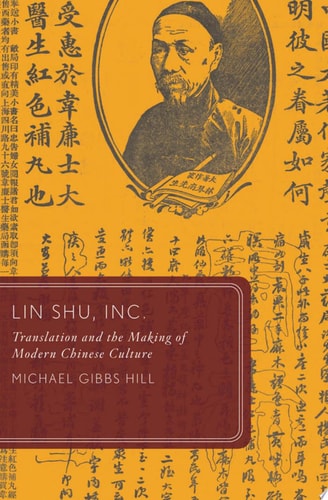
Lin Shu, Inc.: Translation and the Making of Modern Chinese Culture
0
0
As an Amazon Associate and affiliate partner, Menrva Books earns from qualifying purchases. Learn more
Author Description
How could a writer who knew no foreign languages call himself a translator? How, too, did he become a major commercial success, churning out nearly two hundred translations over twenty years?Lin Shu, Inc. crosses the fields of literary studies, intellectual history, and print culture, offering new ways to understand the stakes of translation in China and beyond. With rich detail and lively prose, Michael Gibbs Hill shows how Lin Shu (1852-1924) rose from obscurity to become China's leading translator of Western fiction at the beginning of the twentieth century. Well before Ezra Pound's and Bertolt Brecht's "inventions" of China revolutionized poetry and theater, Lin Shu and his assistants--who did, in fact, know languages like English and French--had already given many Chinese readers their first taste of fiction from the United States, France, and England. After passing through Lin Shu's "factory of writing," classic novels like Uncle Tom's Cabin and Oliver Twist spoke with new meaning for audiences concerned with the tumultuous social and political change facing China.Leveraging his success as a translator of foreign books, Lin Shu quickly became an authority on traditional Chinese culture who upheld the classical language as a cornerstone of Chinese national identity. Eventually, younger intellectuals--who had grown up reading his translations--turned on Lin Shu and tarred him as a symbol of backward conservatism. Ultimately, Lin's defeat and downfall became just as significant as his rise to fame in defining the work of the intellectual in modern China.
Menrva's Summary
THE THESIS
How did a translator who lacked proficiency in foreign languages become the primary architect of Western literary reception in early twentieth-century China? Michael Gibbs Hill, a scholar of Chinese literature and history, examines the career of Lin Shu to investigate the intersection of translation, commercial print culture, and national identity. By analyzing the collaborative nature of Lin's translation 'factory,' the book argues that his work was not merely linguistic transfer but a complex process of cultural negotiation that shaped the intellectual landscape of modern China.
THE SCOPE MAP
What You Will Find
- An analysis of the collaborative translation process involving Lin Shu and his multilingual assistants.
- A historical examination of the early twentieth-century Chinese publishing industry and print culture.
- Case studies of specific translations, including works by Charles Dickens and Harriet Beecher Stowe, and their reception in China.
- A biographical account of Lin Shu's rise to prominence and his eventual decline as a symbol of traditionalist conservatism.
THE AUTHORITY PERSPECTIVE
Scholars in the fields of translation studies and modern Chinese history recognize this work as a significant contribution to understanding the mechanics of cross-cultural literary exchange. Readers frequently note the academic rigor of the text, which provides a detailed look at the social and political pressures that defined the role of the intellectual during a period of rapid national transformation.
Page Count:
320
Publication Date:
2012-11-01
Publisher:
Oxford University Press
ISBN-10:
0199892881
ISBN-13:
9780199892884
History
Biography
Asian Studies
Literary Criticism
Translation Studies
Authorship
Cultural History
Criticism history
China
Community Tags
Similar Books