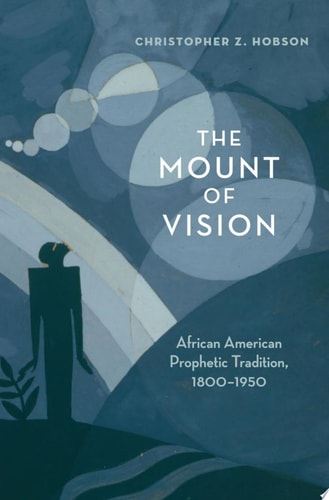
The Mount of Vision: African American Prophetic Tradition, 1800-1950
0
0
As an Amazon Associate and affiliate partner, Menrva Books earns from qualifying purchases. Learn more
Author Description
Drawing on speeches, essays, sermons, reminiscences, and works of theological speculation from 1800 to 1950, Christopher Z. Hobson offers an in-depth study of prophetic traditions in African American religion. He shows how African American prophets shared a belief in a "God of the oppressed:" a God who tested the nation's ability to move toward justice and who showed favor toward struggles for equality.Hobson also provides insight into the conflict between the African American prophets who believed that the nation could one day be redeemed through struggle, and those who felt that its hypocrisy and malevolence lay too deep for redemption. Contrary to the prevalent view that black nationalism is the strongest African American justice tradition, Hobson argues that the reformative tradition in prophecy has been most important and constant in the struggle for equality, and has sparked a politics of prophetic integrationism spanning most of two centuries. Hobson shows too the special role of millennial teaching in sustaining hope for oppressed people and cross-fertilizing other prophecy traditions.The Mount of Vision concludes with an examination of the meaning of African American prohecy today, in the time of the first African American presidency, the semicentenary of the civil rights movement, and the sesquicentennial of the American Civil War: paradoxical moments in which our "post-racial" society is still pervaded by injustice, and prophecy is not fulfilled but endures as a challenge.
Menrva's Summary
THE THESIS
This work investigates the historical development and political implications of the African American prophetic tradition between 1800 and 1950. Christopher Z. Hobson, an academic scholar, synthesizes a wide array of primary source materials—including sermons, essays, and theological treatises—to argue that a reformative, integrationist prophetic tradition has been more central to the struggle for equality than the often-cited black nationalist tradition. He posits that these prophets operated under a shared belief in a God of the oppressed, utilizing millennial teaching to sustain hope and challenge the moral legitimacy of the American nation.
THE SCOPE MAP
What You Will Find
- A comprehensive analysis of African American religious rhetoric from 1800 to 1950.
- Examination of the tension between redemptionist and separatist prophetic ideologies.
- Evaluation of the role of millennialism in sustaining social and political movements.
- A critical assessment of the legacy of prophetic integrationism in the context of modern American society.
THE AUTHORITY PERSPECTIVE
Scholars and historians recognize this text as a significant contribution to the study of American religious history and the intellectual foundations of civil rights activism. Readers frequently note the academic density of the prose, which provides a rigorous framework for understanding the intersection of faith and political justice.
Page Count:
304
Publication Date:
2012-10-03
Publisher:
Oxford University Press
ISBN-10:
0199895864
ISBN-13:
9780199895861
History
Religion
Theology
African Americans
Community Tags
Similar Books