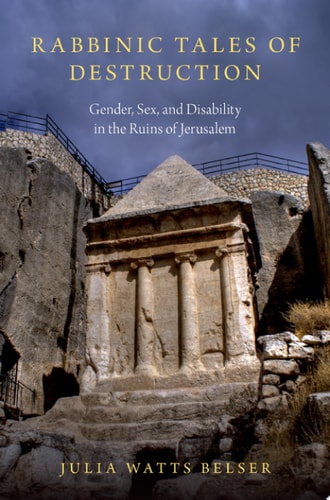
Rabbinic Tales of Destruction
0
0
As an Amazon Associate and affiliate partner, Menrva Books earns from qualifying purchases. Learn more
Author Description
In Rabbinic Tales Of Destruction, Julia Watts Belser Examines Early Jewish Accounts Of The Roman Conquest Of Judea. Faced With Stories Of Sexual Violence, Enslavement, Forced Prostitution, Disability, And Bodily Risk, Belser Argues, Our Readings Of Rabbinic Narrative Must Wrestle With The Brutal Body Costs Of Roman Imperial Domination. She Brings Disability Studies, Feminist Theory, And New Materialist Ecological Thought To Accounts Of Rabbinic Catastrophe, Revealing How Rabbinic Discourses Of Gender, Sexuality, And The Body Are Shaped In The Shadow Of Empire. Focusing On The Babylonian Talmud's Longest Sustained Account Of The Destruction Of The Temple, Belser Reveals Bavli Gittin's Distinctive Sex And Gender Politics. While Palestinian Tales Frequently Castigate The 'wayward Woman' For Sexual Transgressions That Imperil The Nation, Bavli Gittin's Stories Do Not Portray Women's Sexuality As A Cause Of Catastrophe. The Bavli's Resistance To Rome Makes A Critical Difference. While Other Rabbinic Texts Commonly Inveigh Against Women's Beauty As The Cause Of Sexual Sin, Bavli Gittin's Tales Express A Strikingly Egalitarian Discourse That Laments The Vulnerability Of The Beautiful Jewish Body Before The Conqueror. Bavli Gittin's Body Politics, Belser Maintains, Align With A Significant Theological Reorientation. While Most Early Jewish Narratives Link The Destruction Of The Temple To Communal Sin, Bavli Gittin's Account Does Not Explain Catastrophe As Divine Chastisement. Instead Of Imagining God As The Architect Of Jewish Suffering, It Evokes God's Empathy With The Subjugated Jewish Body. As It Navigates The Ruins Of Jerusalem, Bavli Gittin Forges A Sharp Critique Of Empire. Its Critical Discourse Aims To Pierce The Power Politics Of Roman Conquest, To Protest The Brutality Of Imperial Dominance, And To Make Plain The Scar That Roman Violence Leaves Upon Jewish Flesh.
Menrva's Summary
THE THESIS
How do early rabbinic narratives of the Roman conquest of Judea construct meaning around bodily trauma, imperial violence, and divine presence? Julia Watts Belser, a scholar of Jewish studies and disability theory, investigates the Babylonian Talmud’s account of the destruction of the Temple to challenge traditional interpretations of catastrophe. By applying feminist theory, disability studies, and new materialist ecological thought, she argues that these texts offer a distinct critique of Roman imperialism that prioritizes empathy over divine retribution.
THE SCOPE MAP
What You Will Find
- Analysis of the Babylonian Talmud, specifically Bavli Gittin.
- Comparative study between Palestinian and Babylonian rabbinic accounts of the Temple's destruction.
- Theoretical frameworks integrating gender politics, disability studies, and ecological materialist perspectives.
Scope Limits
- The study does not provide a comprehensive history of the entire Roman-Jewish war.
- It does not attempt to reconstruct the literal historical events of the destruction, focusing instead on the narrative and theological discourse.
THE AUTHORITY PERSPECTIVE
Scholars and readers recognize this work as a significant contribution to the intersection of rabbinic literature and critical theory. The text is noted for its rigorous academic approach and its ability to reframe traditional theological debates regarding suffering and divine justice.
Page Count:
256
Publication Date:
2017-01-01
Publisher:
Oxford University Press
ISBN-10:
0190600489
ISBN-13:
9780190600488
Religion
History
Judaism
Ancient History
Theology
Gender Studies
Community Tags
Similar Books