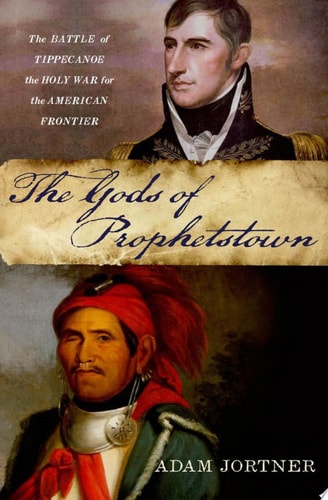
The Gods of Prophetstown
0
0
As an Amazon Associate and affiliate partner, Menrva Books earns from qualifying purchases. Learn more
Author Description
It Began With An Eclipse. In 1806, The Shawnee Leader Tenskwatawa (the Open Door) Declared Himself To Be In Direct Contact With The Master Of Life, And Therefore, The Supreme Religious Authority For All Native Americans. Those Who Disbelieved Him, He Warned, Would See Darkness Come Over The Sun. William Henry Harrison, Governor Of The Indiana Territory And Future American President, Scoffed At Tenskwatawa. If He Was Truly A Prophet, Harrison Taunted, Let Him Perform A Miracle. And Tenskwatawa Did Just That, Making The Sun Go Dark At Midday. In The Gods Of Prophetstown, Adam Jortner Provides A Gripping Account Of The Conflict Between Tenskwatawa And Harrison, Who Finally Collided In 1811 At A Place Called Tippecanoe. Though Largely Forgotten Today, Their Rivalry Determined The Future Of Westward Expansion And Shaped The War Of 1812. Jortner Weaves Together Dual Biographies Of The Opposing Leaders. In The Five Years Between The Eclipse And The Battle, Tenskwatawa Used His Spiritual Leadership To Forge A Political Pseudo-state With His Brother Tecumseh. Harrison, Meanwhile, Built A Power Base In Indiana, Rigging Elections And Maneuvering For Higher Position. Rejecting Received Wisdom, Jortner Sees Nothing As Preordained-native Americans Were Not Inexorably Falling Toward Dispossession And Destruction. Deeply Rooting His Account In A Generation Of Scholarship That Has Revolutionized Indian History, Jortner Places The Religious Dimension Of The Struggle At The Fore, Recreating The Spiritual Landscapes Trod By Each Side. The Climactic Battle, He Writes, Was As Much A Clash Of Gods As Of Men. Written With Profound Insight And Narrative Verve, The Gods Of Prophetstown Recaptures A Forgotten Turning Point In American History In Time For The 200th Anniversary Of The Battle Of Tippecanoe.
Menrva's Summary
THE THESIS
This work investigates the pivotal ideological and political rivalry between the Shawnee prophet Tenskwatawa and Indiana Governor William Henry Harrison, questioning how their clash of religious and secular authority dictated the trajectory of American westward expansion. Adam Jortner, a historian specializing in early American religious and political movements, utilizes primary source documents and contemporary scholarship to reconstruct the period between the 1806 solar eclipse and the 1811 Battle of Tippecanoe. He argues that the conflict was not an inevitable march toward Native American dispossession, but a contingent struggle where spiritual legitimacy served as a primary tool for political mobilization. By centering the religious dimensions of the era, Jortner challenges traditional narratives that view the period solely through the lens of military inevitability.
THE SCOPE MAP
What You Will Find
- A detailed examination of the religious revivalism led by Tenskwatawa and the political maneuvering of William Henry Harrison.
- Analysis of the 1806 solar eclipse as a catalyst for political and spiritual authority.
- Integration of dual biographical narratives to contrast the development of the Shawnee pseudo-state and the Indiana Territory power base.
- Contextualization of the Battle of Tippecanoe as a clash of competing worldviews rather than a simple military engagement.
THE AUTHORITY PERSPECTIVE
Historians and scholars of early American history frequently cite this work for its ability to integrate the religious motivations of Native American leadership into the broader political history of the Indiana Territory. Readers often note that the prose is accessible yet rigorous, providing a balanced perspective that avoids the deterministic tropes common in older accounts of the period.
Page Count:
320
Publication Date:
2011-01-01
Publisher:
Oxford University Press
ISBN-10:
0199909598
ISBN-13:
9780199909599
History
Biography
Religion
War of 1812
Military History
Community Tags
Similar Books