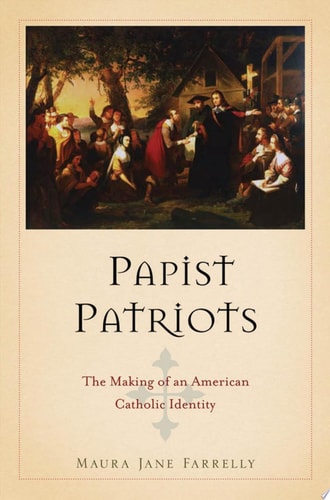
Papist Patriots
0
0
As an Amazon Associate and affiliate partner, Menrva Books earns from qualifying purchases. Learn more
Author Description
The Persons In America Who Were The Most Opposed To Great Britain Had Also, In General, Distinguished Themselves By Being Particularly Hostile To Catholics. So Wrote The Minister, Teacher, And Sometime-historian Jonathan Boucher From His Home In Surrey, England, In 1797. He Blamed Old Prejudices Against Papists For The Revolution's Popularity - Especially In Maryland, Where Most Of The Non-canadian Catholics In British North America Lived. Many Historians Since Boucher Have Noted The Role That Anti-catholicism Played In Stirring Up Animosity Against The King And Parliament. Yet, In Spite Of The Rhetoric, Maryland's Catholics Supported The Independence Movement More Enthusiastically Than Their Protestant Neighbors. Not Only Did Maryland's Catholics Embrace The Idea Of Independence, They Also Embraced The Individualistic, Rights-oriented Ideology That Defined The Revolution, Even Though Theirs Was A Communally Oriented Denomination That Stressed The Importance Of Hierarchy, Order, And Obligation. Catholic Leaders In Europe Made It Clear That The War Was A Sedition Worthy Of Damnation, Even As They Acknowledged That England Had Been No Friend To The Catholic Church. So Why, Then, Did Papists Become Patriots? Maura Jane Farrelly Finds That The Answer Has A Long History, One That Begins In England In The Early Seventeenth Century And Gains Momentum During The Nine Decades Preceding The American Revolution, When Maryland's Catholics Lost A Religious Toleration That Had Been Uniquely Theirs In The English-speaking World And Were Forced To Maintain Their Faith In An Environment That Was Legally Hostile And Clerically Poor. This Experience Made Maryland's Catholics The Colonists Who Were Most Prepared In 1776 To Accept The Cultural, Ideological, And Psychological Implications Of A Break From England.
Menrva's Summary
THE THESIS
This work investigates the paradoxical political alignment of Maryland Catholics who, despite their hierarchical religious tradition, became fervent supporters of the American Revolution. Maura Jane Farrelly, a historian specializing in early American religious and political culture, utilizes archival records and colonial legal documents to challenge the assumption that anti-Catholic sentiment was the primary driver of revolutionary fervor. She argues that the unique experience of Maryland Catholics—who endured decades of legal discrimination and the loss of religious toleration—prepared them to embrace the individualistic, rights-oriented ideology of the independence movement more readily than their Protestant counterparts.
THE SCOPE MAP
What You Will Find
- An analysis of seventeenth-century English religious politics and their influence on colonial Maryland.
- A detailed examination of the legal and social restrictions placed on Catholics in British North America.
- Primary source evidence including colonial records, clerical correspondence, and historical accounts from the era.
- A study of the transition from communal religious identity to the adoption of revolutionary political individualism.
THE AUTHORITY PERSPECTIVE
Scholars recognize this text as a significant contribution to the study of colonial religious identity and its intersection with political radicalism. Readers frequently note the academic density of the prose and the author's meticulous use of historical context to explain a counter-intuitive political shift.
Page Count:
324
Publication Date:
2012-01-01
Publisher:
Oxford University Press
ISBN-10:
0199909377
ISBN-13:
9780199909377
History
Colonial History
American History
Religious History
Community Tags
Similar Books