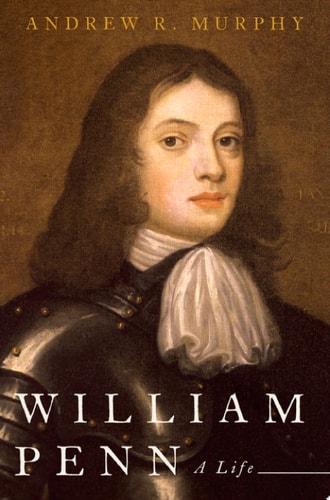
William Penn: A Life
0
0
As an Amazon Associate and affiliate partner, Menrva Books earns from qualifying purchases. Learn more
Author Description
On March 4, 1681, King Charles II granted William Penn a charter for a new American colony. Pennsylvania was to be, in its founder's words, a bold "Holy Experiment" in religious freedom and toleration, a haven for those fleeing persecution in an increasingly intolerant England and across Europe. An activist, political theorist, and the proprietor of his own colony, Penn would become a household name in the New World, despite spending just four years on American soil. Though Penn is an iconic figure in both American and British history, controversy swirled around him during his lifetime. In his early twenties, Penn became a Quaker -- an act of religious as well as political rebellion that put an end to his father's dream that young William would one day join the English elite. Yet Penn went on to a prominent public career as a Quaker spokesman, political agitator, and royal courtier. At the height of his influence, Penn was one of the best-known Dissenters in England and walked the halls of power as a close ally of King James II. At his lowest point, he found himself jailed on suspicion of treason, and later served time in debtor's prison. Despite his importance, William Penn has remained an elusive character -- many people know his name, but few know much more than that. Andrew R. Murphy offers the first major biography of Penn in more than forty years, and the first to make full use of Penn's private papers. The result is a complex portrait of a man whose legacy we are still grappling with today. At a time when religious freedom is hotly debated in the United States and around the world, William Penn's Holy Experiment serves as both a beacon and a challenge.
Menrva's Summary
THE THESIS
How did William Penn reconcile his radical Quaker faith with his role as a political operator and colonial proprietor in the seventeenth-century Atlantic world? Andrew R. Murphy, a professor of political science, utilizes Penn's private papers and extensive historical records to reconstruct the life of a man who navigated the volatile intersections of religious dissent and royal power. The book argues that Penn was not merely a static icon of tolerance, but a complex, often contradictory figure whose political maneuvers and personal struggles shaped the foundations of the American experiment.
THE SCOPE MAP
What You Will Find
- A detailed examination of the seventeenth-century Quaker movement and its political implications.
- Analysis of Penn's relationship with King James II and his navigation of English court politics.
- Insights into the administrative and ideological challenges of establishing the Pennsylvania colony.
- A chronological account of Penn's life, from his early rebellion against his father to his final years in debtor's prison.
Scope Limits
- The text focuses primarily on Penn's political and religious life rather than an exhaustive genealogy of his extended family.
- It does not provide a comprehensive history of the entire Pennsylvania colony beyond the scope of Penn's direct involvement.
THE AUTHORITY PERSPECTIVE
Historians and scholars recognize this work as the definitive modern biography of Penn, noting its rigorous use of previously underutilized archival materials. Readers frequently highlight the balanced approach Murphy takes in addressing both Penn's idealistic goals and his pragmatic, sometimes controversial, political compromises.
Page Count:
488
Publication Date:
2018-01-01
Publisher:
Oxford University Press
ISBN-10:
0190234261
ISBN-13:
9780190234263
Biography
History
Religious History
Quakers biography
American History
English & College Success
English
Colonial History
Biography Autobiography
pioneers
European History
Community Tags
Similar Books