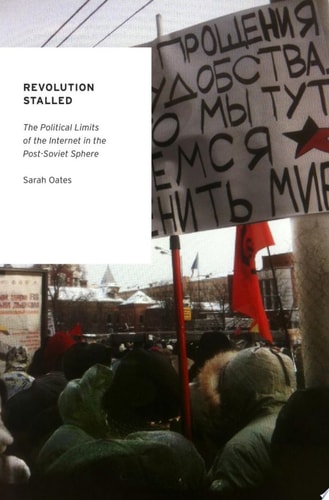
Revolution Stalled: The Political Limits of the Internet in the Post-Soviet Sphere
0
0
As an Amazon Associate and affiliate partner, Menrva Books earns from qualifying purchases. Learn more
Author Description
Can The Internet Fundamentally Challenge Non-free Regimes? The Role That Social Networking Has Played In Promoting Political Change In The Middle East And Beyond Raises Important Questions About The Ability Of Authoritarian Leaders To Control The Information Sphere And Their Subjects. Revolution Stalled Goes Beyond The Idea Of Virtual Politics To Study Five Key Components In The Relationship Between The Online Sphere And Society: Content, Community, Catalysts, Control, And Co-optation. This Analysis Of The Contemporary Russian Internet, Written By A Scholar With In-depth Knowledge Of Both The Post-soviet Media And Media Theory, Illuminates Key Components To How And When The Internet Can Spark Political Action. With Its Analysis Of Current Internet-linked Protests In Russia, This Book Posits That There Are Critical Pre-conditions That Must Exist For The Internet To Be Used Successfully To Challenge Non-free States. In Particular, Russian Leaders Have Made Themselves Vulnerable To Online Protest Movements And Online Social Entrepreneurs Through Their Failure To Control The Internet As Effectively As They Have Controlled Traditional Media. At The Same Time, Russia Has Experienced Explosive Growth In The Online Audience, Tipping The Balance Of Control Away From State-run Television And Toward The More Open Online Sphere. Oates Incorporates Studies Of Small-scale Protests Involving Health Issues And Children With Disabilities To Demonstrate That Russians Have Started To Translate Individual Grievances Into Rising Political Awareness And Efficacy Via The Online Sphere. Her Cases Show That The Russian State Has Struggled To Change Its Information And Control Strategy In The Face Of New Types Of Information Dissemination, Networking, And Protest. This New Environment Has Transformed A State Strategy Of Co-opted Elections Into A Powerful Catalyst For Protests And Demands For Rights. While The Revolution Remains Stalled, This Book Provides Compelling Evidence That A New And C
Menrva's Summary
THE THESIS
This book investigates whether the internet can fundamentally challenge non-free regimes by examining the political limits of digital communication within the post-Soviet sphere. Sarah Oates, a scholar specializing in post-Soviet media and media theory, utilizes a framework centered on five key components: content, community, catalysts, control, and co-optation. By analyzing the contemporary Russian internet, the author argues that specific pre-conditions must exist for digital platforms to successfully facilitate political action against authoritarian control.
THE SCOPE MAP
What You Will Find
- Analysis of the five-part framework: content, community, catalysts, control, and co-optation.
- Case studies of small-scale protests involving health issues and disability rights in Russia.
- Examination of the shift in power from state-run television to the online information sphere.
- Assessment of the vulnerabilities created by the state's failure to effectively regulate digital media compared to traditional outlets.
THE AUTHORITY PERSPECTIVE
Experts recognize this work as a significant contribution to the study of digital authoritarianism and media control in Russia. Readers frequently note the academic rigor of the author's analysis and the clarity with which she connects theoretical media frameworks to real-world political outcomes.
Page Count:
240
Publication Date:
2013-01-01
Publisher:
Oxford University Press, Incorporated
ISBN-10:
0199908877
ISBN-13:
9780199908875
Political Aspects
Russia
Sociology
Internet In Political Campaigns
Media Studies
Community Tags
Other Editions(2)
Similar Books


Reader Comments
Share Your Thoughts
No comments yet. Be the first to share your thoughts!