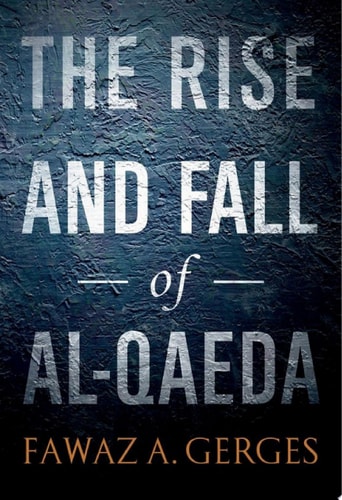
The Rise and Fall of Al-Qaeda
0
0
As an Amazon Associate and affiliate partner, Menrva Books earns from qualifying purchases. Learn more
Author Description
In this concise and fascinating book, Fawaz A. Gerges argues that Al-Qaeda has degenerated into a fractured, marginal body kept alive largely by the self-serving anti-terrorist bureaucracy it helped to spawn. In The Rise and Fall of Al-Qaeda, Gerges, a public intellectual known widely for his expertise on radical ideologies, including jihadism, argues that the Western powers have become mired in a "terrorism narrative," stemming from the mistaken belief that America is in danger of a devastating attack by a crippled al-Qaeda. To explain why al-Qaeda is no longer a threat, he provides a briskly written history of the organization, showing its emergence from the disintegrating local jihadist movements of the mid-1990s-not just the Afghan resistance of the 1980s, as many believe-in "a desperate effort to rescue a sinking ship by altering its course." During this period, Gerges interviewed many jihadis, gaining a first-hand view of the movement that bin Laden tried to reshape by internationalizing it. Gerges reveals that transnational jihad has attracted but a small minority within the Arab world and possesses no viable social and popular base. Furthermore, he shows that the attacks of September 11, 2001, were a major miscalculation--no "river" of fighters flooded from Arab countries to defend al-Qaeda in Afghanistan, as bin Laden expected. The democratic revolutions that swept the Middle East in early 2011 show that al-Qaeda today is a non-entity which exercises no influence over Arabs' political life.Gerges shows that there is a link between the new phenomenon of homegrown extremism in Western societies and the war on terror, particularly in Afghanistan-Pakistan, and that homegrown terror exposes the structural weakness, not strength, of bin Laden's al-Qaeda. Gerges concludes that the movement has splintered into feuding factions, neutralizing itself more effectively than any Predator drone. Forceful, incisive, and written with extensive inside knowledge, this book will change the way we understand the threat of terrorism.
Menrva's Summary
THE THESIS
Fawaz A. Gerges investigates the core question of whether Al-Qaeda remains a viable global threat or if it has devolved into a fractured, marginal entity sustained primarily by Western counter-terrorism narratives.
Gerges, a recognized expert on radical ideologies and jihadism, utilizes his extensive background in Middle Eastern studies to analyze the organization's trajectory. He argues that the group failed to gain a popular base in the Arab world and that its influence has been effectively neutralized by internal fragmentation and the rise of democratic movements. The book challenges the prevailing Western perception of Al-Qaeda's strength by contrasting it with the group's actual structural and social limitations.
THE SCOPE MAP
What You Will Find
- A historical analysis of the emergence of Al-Qaeda from local jihadist movements in the mid-1990s.
- An examination of the disconnect between the group's strategic goals and the reality of Arab political life.
- Primary source insights derived from direct interviews with former jihadis.
- A critical assessment of the impact of the post-9/11 war on terror on homegrown extremism in the West.
THE AUTHORITY PERSPECTIVE
Experts and scholars in international relations frequently cite this work for its nuanced, evidence-based challenge to conventional security narratives. Readers often note the accessibility of the prose, which balances academic rigor with a clear, concise argument regarding the decline of transnational jihadist influence.
Page Count:
272
Publication Date:
2011-01-01
Publisher:
Oxford University Press
ISBN-10:
0199911711
ISBN-13:
9780199911714
History
Religious Aspects
International Security
International relations
Terrorism
Community Tags
Other Editions(3)

Similar Books








Reader Comments
Share Your Thoughts
No comments yet. Be the first to share your thoughts!