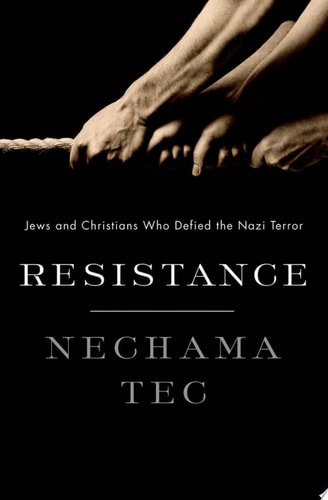
Resistance: Jews and Christians Who Defied the Nazi Terror
0
0
As an Amazon Associate and affiliate partner, Menrva Books earns from qualifying purchases. Learn more
Author Description
Nechama Tec's Defiance, an account of a Jewish partisan unit that fought the Nazis in the Polish forests during World War II, was turned into a major feature film. Yet despite the attention this film brought to the topic of Jewish resistance, Tec, who speaks widely about the Holocaust and the experience of Jews in wartime Poland, still ran into the same question again and again: Why didn't Jews fight back? To Tec, this question suggested that Jews were somehow complicit in their own extermination. Despite works by Tec and others, the stereotype of Jewish passivity in the Holocaust persists. In Resistance, Tec draws on first-hand accounts, interviews, and other sources to reveal the full range of tactics employed to resist the Nazi regime in Poland. She compares Jewish and non-Jewish groups, showing that they faced vastly different conditions. The Jewish resistance had its own particular aims, especially the recovery of dignity and the salvation of lives. Tec explores the conditions necessary for resistance, including favorable topography, a supply of arms, and effective leadership, and dedicates the majority of the book to the stories of those who stood up and fought back in any way that they could. Emphasizing the centrality of cooperation to the Jewish and Polish resistance movements of World War II, Tec argues that resistance is more than not submitting--that it requires taking action, and demands cooperation with others. Whereas resilience is individual in orientation, Tec writes, resistance assumes others. Within this context, Tec explores life in the ghettoes, the organizations that arose within them, and the famous uprising in Warsaw that began on January 18, 1943. She tells of those who escaped to hide and fight as partisans in the forests, and considers the crucial role played by women who acted as couriers, carrying messages and supplies between the ghetto and the outside world. Tec also discusses resistance in concentration camps, vividly recounting the A
Menrva's Summary
THE THESIS
This work investigates the persistent historical stereotype of Jewish passivity during the Holocaust by documenting the diverse and active forms of resistance employed by Jews and their allies against the Nazi regime in Poland. Nechama Tec, a sociologist and Holocaust survivor, utilizes her extensive background in historical research and personal testimony to challenge the narrative that victims were complicit in their own destruction. By analyzing the structural and environmental constraints of the era, she argues that resistance was a multifaceted endeavor requiring cooperation, leadership, and specific tactical conditions to succeed.
THE SCOPE MAP
What You Will Find
- Analysis of resistance tactics within Polish ghettos and concentration camps.
- Comparative study of Jewish and non-Jewish partisan groups operating in Polish forests.
- Examination of the logistical requirements for effective resistance, including topography and weaponry.
- Documentation of the roles played by women as couriers and organizers in underground networks.
THE AUTHORITY PERSPECTIVE
Historians and scholars frequently cite this text as a critical corrective to long-standing misconceptions regarding Jewish agency during the Second World War. Experts highlight the book's rigorous reliance on primary source interviews and its nuanced sociological framework as foundational for understanding the complexities of wartime survival.
Page Count:
256
Publication Date:
2013-01-01
Publisher:
Oxford University Press
ISBN-10:
0199912629
ISBN-13:
9780199912629
History
Biography
Religion
Jewish Studies
Judaism
European History
Military History
Poland
Holocaust
Community Tags
Other Editions(2)

Similar Books



Reader Comments
Share Your Thoughts
No comments yet. Be the first to share your thoughts!