
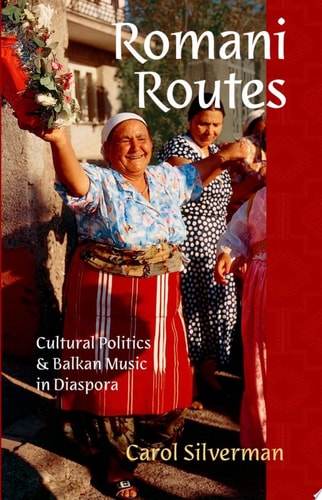
Romani Routes: Cultural Politics and Balkan Music in Diaspora
0
0
As an Amazon Associate and affiliate partner, Menrva Books earns from qualifying purchases. Learn more
Author Description
Now that the political and economic plight of European Roma and the popularity of their music are objects of international attention, Romani Routes provides a timely and insightful view into Romani communities both in their home countries and in the diaspora. Over the past two decades, a steady stream of recordings, videos, feature films, festivals, and concerts has presented the music of Balkan Gypsies, or Roma, to Western audiences, who have greeted them with exceptional enthusiasm. Yet, as author Carol Silverman notes, Roma are revered as musicians and reviled as people. In this book, Silverman introduces readers to the people and cultures who produce this music, offering a sensitive and incisive analysis of how Romani musicians address the challenges of discrimination. Focusing on southeastern Europe then moving to the diaspora, her book examines the music within Romani communities, the lives and careers of outstanding musicians, and the marketing of music in the electronic media and "world music" concert circuit. Silverman touches on the way that the Roma exemplify many qualities--adaptability, cultural hybridity, transnationalism--that are taken to characterize late modern experience. And rather than just celebrating these qualities, she presents the musicians as complicated, pragmatic individuals who work creatively within the many constraints that inform their lives.
Menrva's Summary
THE THESIS
This book investigates the paradox of Romani musicians who are simultaneously celebrated for their artistic contributions and marginalized by systemic social and economic discrimination. Carol Silverman, a professor of anthropology and folklore, utilizes two decades of ethnographic fieldwork to analyze how Romani musicians in southeastern Europe and the diaspora navigate these conflicting realities. She argues that music serves as a vital site of cultural agency, allowing performers to negotiate identity, combat prejudice, and participate in the global 'world music' market while maintaining community ties.
THE SCOPE MAP
What You Will Find
- Analysis of the marketing and commodification of Romani music within the global electronic media and concert circuit.
- Ethnographic case studies of individual musicians and their career trajectories in both home countries and diaspora locations.
- Examination of the intersection between political marginalization and cultural expression in southeastern Europe.
- Discussion of theoretical concepts such as transnationalism, cultural hybridity, and adaptability in the context of late modern experience.
THE AUTHORITY PERSPECTIVE
Experts in ethnomusicology and Balkan studies frequently cite this work as a foundational text for understanding the complex relationship between Romani identity and performance. Readers often note the balance between rigorous academic analysis and the empathetic portrayal of the musicians' lived experiences.
Page Count:
437
Publication Date:
2011-01-01
Publisher:
Oxford University Press
ISBN-10:
0199913358
ISBN-13:
9780199913350
Music
Music History
Humanities
Anthropology
Balkan Studies
Cultural Anthropology
Sociology
Community Tags
Other Editions(4)

Similar Books








Reader Comments
Share Your Thoughts
No comments yet. Be the first to share your thoughts!