Strange Women
0
0
As an Amazon Associate and affiliate partner, Menrva Books earns from qualifying purchases. Learn more
Author Description
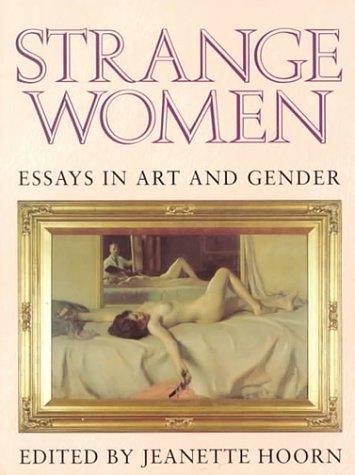
"Art, like all forms of cultural production, is subject to regulation. Its shape is socially induced by power relationships, its form never accidental or natural. In this collection of essays, Jeanette Hoorn and her co-writers' examine how women's art in Australia was controlled and shaped from the mid-nineteenth century until World War II."--BOOK JACKET. "In a community where the masculine landscape tradition was considered the acme of Australian painting and one that embodied a 'true' national identity, the new Modernist painting of women was seen as marginal and incidental. Yet, Strange Women argues, it was in the work of Grace Cossington Smith, Thea Proctor, Margaret Preston and Grace Crowley that the groundwork was laid for much of Modernist practice. The painter Hilda Rix Nicholas challenged this exclusion by claiming the freedom to work in areas regarded as male preserves."--BOOK JACKET. "Strange Women also explores a number of issues concerned with the work of women painters and the representation of women in painting by men. This challenging book looks behind the commonly assumed narratives of art criticism to present a provocative new reading of gender in Australian painting."--BOOK JACKET.
Menrva's Summary
THE THESIS
This collection of essays investigates the regulation and social shaping of women's art in Australia from the mid-nineteenth century until World War II. The book examines how the dominant masculine landscape tradition in Australian painting marginalized the new Modernist art produced by women. Despite this exclusion, the essays argue that artists like Grace Cossington Smith, Thea Proctor, Margaret Preston, and Grace Crowley laid the groundwork for much of Modernist practice, while Hilda Rix Nicholas challenged norms by working in male-dominated artistic spheres. The work also explores the representation of women in paintings by men, offering a new reading of gender in Australian art.
THE SCOPE MAP
- Analysis of art regulation and social power dynamics influencing artistic production.
- Focus on Australian women painters from the mid-19th century to WWII.
- Examination of the marginalization of women's Modernist art within a masculine landscape tradition.
- Discussion of key artists including Grace Cossington Smith, Thea Proctor, Margaret Preston, and Grace Crowley.
- Exploration of Hilda Rix Nicholas's challenge to gendered artistic preserves.
- Investigation into the representation of women in paintings by male artists.
- A re-reading of gender dynamics within Australian painting history.
THE AUTHORITY PERSPECTIVE
This collection of essays is presented as a challenging and provocative new reading of gender in Australian painting, aiming to look behind commonly assumed narratives in art criticism. The book's premise suggests it offers a critical examination of how power relationships have shaped artistic output, particularly concerning women artists. By focusing on specific artists and the broader context of Australian art history, it seeks to re-evaluate the contributions and experiences of women within the art world. The work is positioned to engage with scholarly discourse on art history and gender studies.
Page Count:
200
Publication Date:
1994-01-01
ISBN-10:
0522845673
History
Art
Non-Fiction
Australian Art
Modernism
Gender Studies
Art History
Community Tags
Similar Books