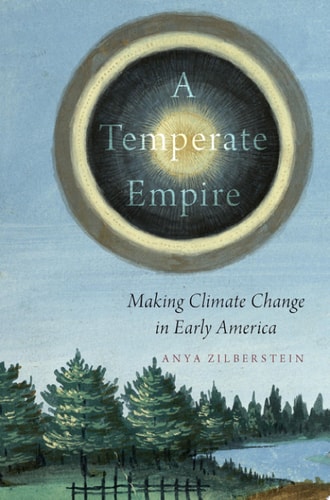
A Temperate Empire
0
0
As an Amazon Associate and affiliate partner, Menrva Books earns from qualifying purchases. Learn more
Author Description
Controversy Over The Role Of Human Activity In Causing Climate Change Is Pervasive In Contemporary Society. But, As Anya Zilberstein Shows In This Work, Debates About The Politics And Science Of Climate Are Nothing New. Indeed, They Began As Early As The Settlement Of English Colonists In North America, Well Before The Age Of Industrialization. In The Seventeenth And Eighteenth Centuries, Many Early Americans Believed That Human Activity And Population Growth Were Essential To Moderating The Harsh Extremes Of Cold And Heat In The New World. In The Preindustrial British Settler Colonies In Particular, It Was Believed That The Right Kinds Of People Were Agents Of Climate Warming And That This Was A Positive And Deliberate Goal Of Industrious Activity, Rather Than An Unintended And Lamentable Side Effect Of Development. A Temperate Empire Explores The Ways That Colonists Studied And Tried To Remake Local Climates In New England And Nova Scotia According To Their Plans For Settlement And Economic Growth. For Colonial Officials, Landowners, Naturalists, And Other Elites, The Frigid, Long Winters And Short, Muggy Summers Were Persistent Sources Of Anxiety. These Early Americans Became Intensely Interested In Reimagining And Reducing Their Vulnerability To The Climate. Linking Climate To Race, They Assured Would-be Migrants That Hardy Europeans Were Already Habituated To The Severe Northern Weather And Caribbean Migrants' Temperaments Would Be Improved By It. Even More, They Drew On A Widespread Understanding Of A Reciprocal Relationship Between A Mild Climate And The Prosperity Of Empire, Promoting The Notion That Land Cultivation And The Expansion Of Colonial Farms Would Increasingly Moderate The Climate. One Eighteenth-century Naturalist Observed That European Settlement And Industry Had Already Brought About A More Temperate, Uniform, And Equal Climate Worldwide-a Forecast Of A Permanent, Global Warming That Was Wholeheartedly Welcomed. Illuminating Scientific Argument
Menrva's Summary
THE THESIS
This work investigates the historical origins of climate change discourse by examining how early British settlers in North America viewed human activity as a deliberate tool for climate modification. Anya Zilberstein, a historian specializing in environmental and colonial studies, utilizes archival records, naturalists' writings, and colonial administrative documents to reconstruct the pre-industrial belief system regarding climate. She argues that early settlers perceived the transformation of the environment through agriculture and population growth as a positive, intentional strategy to mitigate extreme weather conditions and foster imperial prosperity.
THE SCOPE MAP
What You Will Find
- Analysis of 17th and 18th-century colonial climate theories in New England and Nova Scotia.
- Examination of the intersection between climate, race, and migration patterns.
- Historical perspectives on the relationship between land cultivation and environmental regulation.
Scope Limits
- The study focuses primarily on British settler colonies in North America rather than global colonial experiences.
- It does not cover the post-industrial era or modern climate science developments.
THE AUTHORITY PERSPECTIVE
Scholars in the field of environmental history recognize this text as a significant contribution to understanding the long-standing human desire to control natural environments. Readers frequently note the academic rigor of the research and the clarity with which the author connects early colonial anxieties to contemporary climate debates.
Page Count:
304
Publication Date:
2016-01-01
Publisher:
Oxford University Press
ISBN-10:
0190206608
ISBN-13:
9780190206604
History
American History
Science History
Colonial History
Environmental History
Community Tags
Similar Books