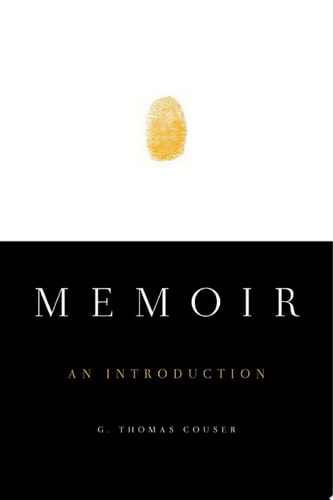
Memoir: An Introduction
0
0
As an Amazon Associate and affiliate partner, Menrva Books earns from qualifying purchases. Learn more
Author Description
Each year brings a batch of new memoirs, ranging from works by former teachers and celebrity has-beens to disillusioned soldiers and bestselling novelists. In addition to becoming bestsellers in their own right, memoirs have become a popular object of inquiry in the academy and a mainstay in most MFA workshops. Courses in what is now called "life writing" study memoir alongside personal essays, diaries, and autobiographies. Memoir: An Introduction proffers a succinct and comprehensive survey of the genre (and its many subgenres) while taking readers through the various techniques, themes, and debates that have come to characterize the ubiquitous literary form. Its fictional origins are traced to eighteenth-century British novels; its early American roots are examined in Benjamin Franklin's Autobiography and colonial captivity narratives; and its ethical conundrums are considered via the imbroglios brought on by the questionable claims in Rigoberta Menchú's I, Rigoberta, and more notoriously, James Frey's A Million Little Pieces. Alongside these more traditional literary forms, Couser expands the discussion of memoir to include film with what he calls "documemoir" (exemplified in Nathaniel Kahn's My Architect) and graphic narratives like Art Spiegelman's Maus.
Menrva's Summary
THE THESIS
This book investigates the evolution, structural mechanics, and ethical complexities inherent in the contemporary memoir genre. G. Thomas Couser, a scholar of life writing, synthesizes historical development with modern critical theory to explain why memoir has become a dominant literary and academic form. He argues that the genre functions as a fluid space where personal narrative intersects with public truth, requiring readers to navigate the tension between factual accuracy and artistic representation.
THE SCOPE MAP
What You Will Find
- Historical analysis of memoir origins from eighteenth-century British novels to colonial captivity narratives.
- Examination of ethical controversies surrounding factual accuracy in high-profile memoirs.
- Exploration of diverse media formats including documemoir and graphic narratives.
- Theoretical framework for analyzing life writing within academic and MFA workshop settings.
THE AUTHORITY PERSPECTIVE
Experts recognize this work as a foundational text for students and scholars of life writing. Readers frequently note the clarity of the prose, which effectively balances academic rigor with accessible explanations of complex literary debates.
Page Count:
208
Publication Date:
2011-01-01
Publisher:
Oxford University Press
ISBN-10:
0199927073
ISBN-13:
9780199927074
Autobiography
Biography
Non-Fiction
Biography Autobiography
English & College Success
Literary Criticism
Authorship
Academic
English
Writing
Community Tags
Similar Books