The Evolution of the Book
0
0
As an Amazon Associate and affiliate partner, Menrva Books earns from qualifying purchases. Learn more
Author Description
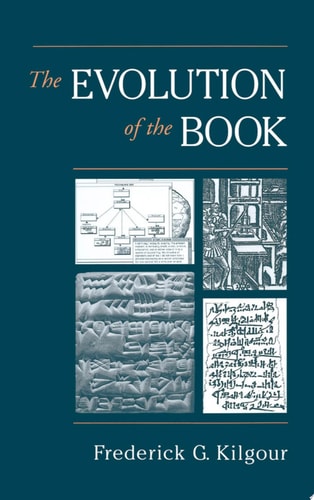
Distinguished scholar and library systems innovator Frederick Kilgour tells a five-thousand-year story in this exciting work, a tale beginning with the invention of writing and concluding with the emerging electronic book. Calling on a lifetime of interest in the growth of information technology, Kilgour brings a fresh approach to the history of the book, emphasizing in rich, authoritative detail the successive technological advances that allowed the book to keep pace with ever-increasing needs for information. Borrowing a concept from evolutionary theory--the notion of punctuated equilibria--to structure his account, Kilgour investigates the book's three discrete historical forms--the clay tablet, papyrus roll, and codex--before turning to a fourth, still evolving form, the cyber book, a version promising swift electronic delivery of information in text, sound, and motion to anyone at any time. The clay tablet, initially employed as a content descriptor for sacks of grain, proved inadequate to the growing need for commercial and administrative records. Its successor the papyrus roll was itself succeeded by the codex, a format whose superior utility and information capacity led to sweeping changes in the management of accumulated knowledge, the pursuit of learning, and the promulgation of religion. Kilgour throughout considers closely both technological change and the role this change played in cultural transformation. His fascinating account of the modern book, from Gutenberg's invention of cast-type printing five hundred years ago to the arrival of books displayed on a computer screen, spotlights the inventors, engineers, and entrepreneurs who in creating the machinery of production and dissemination enabled the book to maintain its unique cultural power over time.Deft, provocative, and accessibly written, The Evolution of the Book will captivate book lovers as well as those interested in bibliographic history, the history of writing, and the history of technology
Menrva's Summary
THE THESIS
How have technological shifts in information storage and retrieval shaped the evolution of the book over five millennia? Frederick G. Kilgour, a pioneer in library systems, utilizes the evolutionary theory of punctuated equilibria to analyze the development of the book. He argues that the book has undergone distinct transformations—from clay tablets to the digital era—driven by the necessity to meet increasing human demands for information access and management.
THE SCOPE MAP
What You Will Find
- Historical analysis of the clay tablet, papyrus roll, and codex formats
- Examination of the transition from print to electronic media
- Biographical focus on the inventors and engineers behind printing technology
- Theoretical framework applying punctuated equilibria to bibliographic history
Scope Limits
- Does not provide a comprehensive history of literary content or authorship
- Focuses primarily on the physical and technological medium rather than the sociological impact of specific texts
THE AUTHORITY PERSPECTIVE
Experts recognize this work as a foundational text for understanding the intersection of library science and technological history. Readers frequently note the clarity of the prose, which makes complex bibliographic shifts accessible to both scholars and general enthusiasts.
Page Count:
178
Publication Date:
1998-01-01
Publisher:
Oxford University Press
ISBN-10:
0190283653
ISBN-13:
9780190283650
Non-Fiction
History
Information Science
Books history
Writing
English
Technology
English & College Success
Community Tags
Other Editions(2)
Similar Books










Reader Comments
Share Your Thoughts
No comments yet. Be the first to share your thoughts!