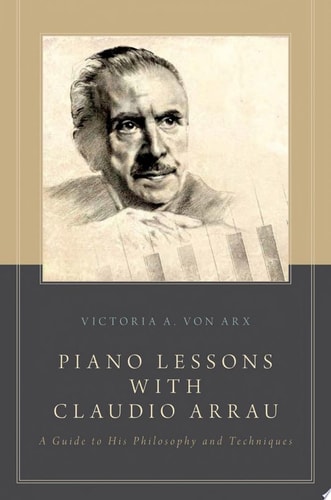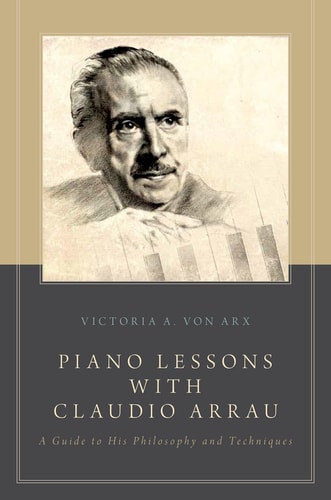
Piano Lessons with Claudio Arrau: A Guide to His Philosophy and Techniques
Author Description
Piano Lessons with Claudio Arrau provides an insider's view of the art of piano performance as exemplified by one of the great artists of the twentieth century. Chilean pianist Claudio Arrau devoted his life to the piano and its music. As a child prodigy, he gained national recognition from government officials in Chile, including President Pedro Montt, who funded Arrau's education in Germany. Arrau studied in Berlin with Martin Krause, a pupil of Franz Liszt, and later immigrated to New York City where he taught and mentored a sizeable group of pupils while at the same time managing an international performing career. Arrau's profound musical insight and unique style of teaching inspired his pupils and motivated them to teach his principles to the next generation of students.This in-depth study of Arrau's principles and philosophy of technique and performance draws on information from published interviews with Arrau, from numerous interviews with Arrau's pupils, and from the author's experience in studying piano with two of them. Transcripts of actual lessons given by Arrau and preserved on tape present in his own words a detailed account of his technical and interpretive ideas about five major works of the piano repertory. References to over one hundred examples from Arrau's filmed recordings enable readers to observe the elements of Arrau's famed technique in action.
Menrva's Summary
THE THESIS
This book investigates the pedagogical philosophy and technical methodology of twentieth-century virtuoso Claudio Arrau to determine how his specific approach to piano performance shaped his students and the broader musical landscape. Victoria A. von Arx, a scholar and pianist who studied under Arrau's direct pupils, synthesizes historical data, personal interviews, and archival recordings to construct a comprehensive framework of his teaching. The text argues that Arrau's unique synthesis of Lisztian tradition and personal insight created a distinct lineage of performance practice that continues to influence modern pianists. By analyzing both his verbal instructions and his physical execution, the author provides a structured look at the mechanics behind his artistry.
THE SCOPE MAP
What You Will Find
- Detailed analysis of Arrau's technical and interpretive principles applied to five major works of the piano repertoire.
- Transcripts of actual lessons preserved on tape, offering direct insight into his instructional style.
- References to over one hundred examples from Arrau's filmed recordings to illustrate specific physical techniques.
- Historical context regarding Arrau's early education in Berlin under Martin Krause and his subsequent career in New York City.
THE AUTHORITY PERSPECTIVE
Experts and music educators identify this work as a primary resource for understanding the technical lineage of the Lisztian school. Readers frequently note the academic density of the prose, which serves as both a historical record and a practical guide for advanced students of the instrument.
Page Count:
496
Publication Date:
2014-06-25
Publisher:
Oxford University Press
ISBN-10:
0199924341
ISBN-13:
9780199924349
Music
Biography
Pianists
Criticism history
Education
Performance art
Piano
Community Tags
Similar Books