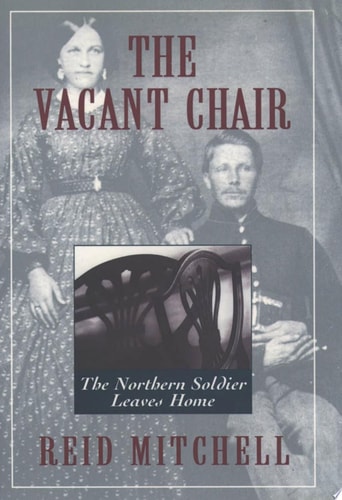
The Vacant Chair
0
0
As an Amazon Associate and affiliate partner, Menrva Books earns from qualifying purchases. Learn more
Author Description
In Many Ways, The Northern Soldier In The Civil War Fought As If He Had Never Left Home. On Campsites And Battlefields, The Union Volunteer Adapted To Military Life With Attitudes Shaped By Networks Of Family Relationships, In Units Of Men From The Same Hometown. Understanding These Links Between The Homes The Troops Left Behind And The War They Had To Fight, Writes Reid Mitchell, Offers Critical Insight Into How They Thought, Fought, And Persevered Through Four Bloody Years Of Combat. In The Vacant Chair, Mitchell Draws On The Letters, Diaries, And Memoirs Of Common Soldiers To Show How Mid-nineteenth-century Ideas And Images Of The Home And Family Shaped The Union Soldier's Approach To Everything From Military Discipline To Battlefield Bravery. For Hundreds Of Thousands Of Boys, As They Called Themselves, The Union Army Was An Extension Of Their Home And Childhood Experiences. Many Experienced The War As A Coming-of-age Rite, A Test Of Such Manly Virtues As Self-control, Endurance, And Courage. They Served In Companies Recruited From The Same Communities, And They Wrote Letters Reporting On Each Other's Performance--conscious That Their Own Behavior In The Army Would Affect Their Reputations Back Home. So, Too, Were They Deeply Affected By Letters From Their Families, As Wives And Mothers Complained Of Suffering Or Demanded Greater Valor. Mitchell Also Shows How This Hometown Basis For Volunteer Units Eroded Respect For Military Rank, As Men Served With Officers They Saw As Equals: Lieut Col Dewey Introduced Hugh T Reid, One Sergeant Wrote Dryly, By Saying, 'boys, Behold Your Colonel,' And Webeheldhim. In Return, Officers Usually Adopted Paternalist Attitudes Toward Their Boys--especially In The Case Of White Officers Commanding Black Soldiers. Mitchell Goes On To Look At The Role Of Women In The Soldiers' Experiences, From The Feminine Center Of Their Own Households To Their Hatred Of Confederate Women As She-devils. The Intimate Relations And Inner Life Of The U
Menrva's Summary
THE THESIS
How did the domestic values and community ties of the nineteenth-century North influence the conduct and psychological endurance of Union soldiers during the Civil War? Reid Mitchell, a historian specializing in the American Civil War, examines the intersection of private life and public military service. By analyzing primary source materials, he argues that the Union army functioned as an extension of the soldiers' hometowns, where familial expectations and local reputations dictated behavior, discipline, and perceptions of combat.
THE SCOPE MAP
What You Will Find
- Analysis of primary source materials including personal letters, diaries, and memoirs of Union soldiers.
- Examination of the social dynamics within volunteer units recruited from the same hometowns.
- Exploration of the influence of nineteenth-century gender roles and family expectations on military performance.
- Investigation of the relationship between soldiers and their officers, specifically regarding the erosion of traditional military hierarchy.
THE AUTHORITY PERSPECTIVE
Historians and scholars of the American Civil War frequently cite this work for its focus on the social and psychological dimensions of the common soldier. The text is recognized for its accessible prose and its ability to bridge the gap between domestic history and military operations.
Page Count:
232
Publication Date:
1993-01-01
Publisher:
Oxford University Press, Incorporated
ISBN-10:
0199938199
ISBN-13:
9780199938193
History
Civil War
Social History
United States
Social Aspects
New York
Military life
Military History
American History
Community Tags
Similar Books














