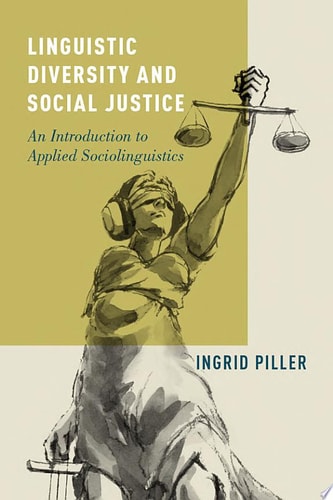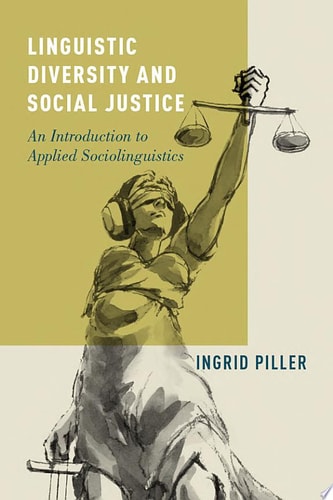
Linguistic Diversity and Social Justice
0
0
As an Amazon Associate and affiliate partner, Menrva Books earns from qualifying purchases. Learn more
Author Description
Understanding and addressing linguistic disadvantage must be a central facet of the social justice agenda of our time. This book explores the ways in which linguistic diversity mediates social justice in liberal democracies undergoing rapid change due to high levels of migration and economic globalization. Focusing on the linguistic dimensions of economic inequality, cultural domination and imparity of political participation, Linguistic Diversity and Social Justice employs a case-study approach to real-world instances of linguistic injustice. Linguistic diversity is a universal characteristic of human language but linguistic diversity is rarely neutral; rather it is accompanied by linguistic stratification and linguistic subordination. Domains critical to social justice include employment, education, and community participation. The book offers a detailed examination of the connection between linguistic diversity and inequality in these specific contexts within nation states that are organized as liberal democracies. Inequalities exist not only between individuals and groups within a state but also between states. Therefore, the book also explores the role of linguistic diversity in global injustice with a particular focus on the spread of English as a global language. While much of the analysis in this book focuses on language as a means of exclusion, discrimination and disadvantage, the concluding chapter asks what the content of linguistic justice might be.
Menrva's Summary
THE THESIS
This book investigates how linguistic diversity functions as a mechanism for social injustice and inequality within contemporary liberal democracies. Ingrid Piller, a scholar in applied linguistics, utilizes a framework of social justice to analyze how language policies and practices contribute to economic stratification, cultural domination, and political exclusion. By examining the intersection of migration, globalization, and language, the author argues that linguistic subordination is a critical, yet often overlooked, dimension of systemic inequality.
THE SCOPE MAP
What You Will Find
- Analysis of linguistic stratification in employment, education, and community participation sectors.
- Examination of the role of English as a global language in perpetuating international inequality.
- Case studies illustrating real-world instances of linguistic injustice in diverse nation-states.
- A theoretical exploration of the potential components and requirements for achieving linguistic justice.
THE AUTHORITY PERSPECTIVE
Experts recognize this work as a significant contribution to the intersection of sociolinguistics and political philosophy. Readers frequently note the academic density of the prose and the author's rigorous application of social justice theory to linguistic data.
Page Count:
376
Publication Date:
2014-08-11
Publisher:
Oxford University Press
ISBN-10:
0199937265
ISBN-13:
9780199937264
Philosophy
Linguistics
Sociology
Feminist Theory
Social justice