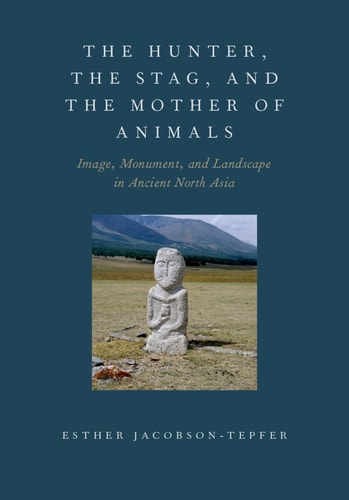
The Hunter, the Stag, and the Mother of Animals: Image, Monument, and Landscape in Ancient North Asia
0
0
As an Amazon Associate and affiliate partner, Menrva Books earns from qualifying purchases. Learn more
Author Description
The ancient landscape of North Asia gave rise to a mythic narrative of birth, death, and transformation that reflected the hardship of life for ancient nomadic hunters and herders. Of the central protagonists, we tend to privilege the hero hunter of the Bronze Age and his re-incarnation as a warrior in the Iron Age. But before him and, in a sense, behind him was a female power, half animal, half human. From her came permission to hunt the animals of the taiga, and by her they were replenished. She was, in other words, the source of the hunter's success. The stag was a latecomer to this tale, a complex symbol of death and transformation embedded in what ultimately became a struggle for priority between animal mother and hero hunter.From this region there are no written texts to illuminate prehistory, and the hundreds of burials across the steppe reveal little relating to myth and belief before the late Bronze Age. What they do tell us is that peoples and cultures came and went, leaving behind huge stone mounds, altars, and standing stones as well as thousands of petroglyphic images. With The Hunter, the Stag, and the Mother of Animals, Esther Jacobson-Tepfer uses that material to reconstruct the prehistory of myth and belief in ancient North Asia. Her narrative places monuments and imagery within the context of the physical landscape and by considering all three elements as reflections of the archaeology of belief. Within that process, paleoenvironmental forces, economic innovations, and changing social order served as pivots of mythic transformation. With this vividly illustrated study, Jacobson-Tepfer brings together for this first time in any language Russian and Mongolian archaeology with prehistoric representational traditions of South Siberia and Mongolia in order to explore the non-material aspects of these fascinating prehistoric cultures.
Menrva's Summary
THE THESIS
This work investigates the evolution of mythic belief systems in ancient North Asia by analyzing the interplay between petroglyphic imagery, funerary monuments, and the physical landscape. Esther Jacobson-Tepfer, a scholar of Central Asian art and archaeology, synthesizes decades of research from Russian and Mongolian sites to argue that prehistoric belief was not static but shifted in response to paleoenvironmental changes and social restructuring. By examining the transition from the veneration of a female animal-mother figure to the dominance of the hero-hunter and the stag, the author provides a framework for understanding the non-material culture of nomadic societies that left no written records.
THE SCOPE MAP
What You Will Find
- Analysis of petroglyphic imagery from South Siberia and Mongolia.
- Examination of Bronze and Iron Age funerary monuments and stone altars.
- Integration of paleoenvironmental data with archaeological findings.
- Comparative study of Russian and Mongolian archaeological traditions.
Scope Limits
- The study is limited to pre-literate cultures and does not address later historical periods with written documentation.
- The research focuses specifically on the regions of South Siberia and Mongolia rather than the entirety of the Asian continent.
THE AUTHORITY PERSPECTIVE
Scholars recognize this text as a significant synthesis of previously disparate regional archaeological data, particularly for its effort to bridge Russian and Mongolian research traditions. Readers frequently note the academic density of the prose and the extensive use of visual evidence to support the author's theoretical reconstruction of prehistoric belief systems.
Page Count:
448
Publication Date:
2015-05-06
Publisher:
Oxford University Press
ISBN-10:
019020236X
ISBN-13:
9780190202361
History
Archaeology
Mythology
North Asia
Anthropology
Deer
Prehistory
Goddesses
Art History
Social change
Humanities
Community Tags
Similar Books