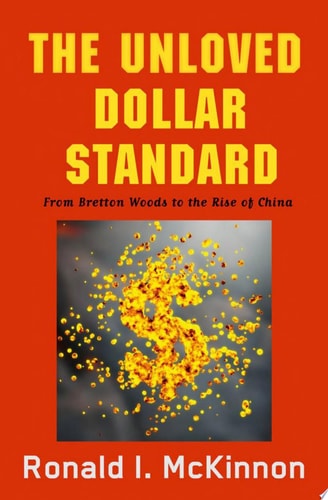
The Unloved Dollar Standard: From Bretton Woods to the Rise of China
0
0
As an Amazon Associate and affiliate partner, Menrva Books earns from qualifying purchases. Learn more
Author Description
The world dollar standard is an accident of history that greatly facilitates international trade and exchange-even trade not directly involving the United States. Since 1945, the dollar has been the key currency for clearing international payments among banks including interventions by governments to set exchange rates, the dominant currency for invoicing trade in primary commodities, and the principal currency in official exchange reserves.Although the strong network effects of the dollar standard greatly increases the financial efficiency of multilateral trade, nobody loves it. Erratic U.S. monetary and exchange rate policies have continually made foreigners unhappy. A weak and falling dollar led to the worldwide price inflations of the 1970s and contributed to the disastrous asset bubbles and global credit crisis of the noughties -- including the global credit crunch of 2008-09. Dollar weakness aggravated the postwar world's three great oil shocks in 1973, 1979, and 2007-08. After 2008, the U.S. Federal Reserve Bank's policy of keeping short-term interest rates near zero and out of alignment with emerging markets on the dollar standard's periphery, makes the international monetary system vulnerable to 'carry' trades: hot money inflows into the periphery that cause a loss of monetary control, commodity bubbles, and worldwide inflation. When these carry-trade bubbles suddenly unwind, they can result in huge swings in exchange rates and credit crunches.The asymmetrical nature of the dollar standard also makes many Americans unhappy because they cannot control their own exchange rate. Under the rules of the dollar standard game as explained in chapters 2 and 3 of this book, foreign governments may opt to set their exchange rates against the dollar while, to prevent conflict, the U.S. government typically does not intervene. Nevertheless, Americans often complain about how foreigners set their dollar exchange rates unfairly. Japan bashing in the late 1970s to the mid-
Menrva's Summary
THE THESIS
This book investigates the inherent instability and systemic tensions of the global dollar standard, questioning whether its role as the world's primary reserve currency is sustainable in the face of erratic U.S. monetary policy and the rise of emerging economies. Ronald I. McKinnon, a prominent economist, utilizes his extensive background in international finance to analyze the historical evolution of the dollar from the Bretton Woods era to the modern period. He argues that the asymmetrical nature of the dollar standard creates a cycle of inflation and credit crises that negatively impacts both the United States and its international trading partners. The text provides a rigorous framework for understanding how U.S. interest rate policies influence global capital flows and commodity markets.
THE SCOPE MAP
What You Will Find
- Historical analysis of the international monetary system from 1945 to the post-2008 era.
- Examination of the mechanics of 'carry' trades and their impact on global inflation.
- Discussion of the network effects that maintain the dollar's dominance despite its perceived flaws.
- Case studies on the relationship between U.S. monetary policy and economic volatility in Japan and China.
THE AUTHORITY PERSPECTIVE
Experts recognize this work as a significant contribution to the study of international monetary economics, particularly for its clear articulation of the 'dollar standard' framework. Readers frequently note the technical density of the prose, which is best suited for those with a foundational understanding of macroeconomic policy and global finance.
Page Count:
240
Publication Date:
2012-12-27
Publisher:
Oxford University Press
ISBN-10:
0199937001
ISBN-13:
9780199937004
History
Economics
International relations
Finance
Dollar
Money_china
Community Tags
Similar Books