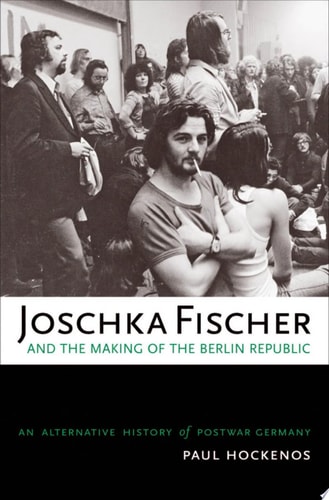
Joschka Fischer and the Making of the Berlin Republic: An Alternative History of Postwar Germany
0
0
As an Amazon Associate and affiliate partner, Menrva Books earns from qualifying purchases. Learn more
Author Description
Over the course of his long and controversial career, Joschka Fischer evolved from an archetypal 1960s radical--a firebrand street activist--into a shrewd political insider, operating at the heights of German politics. In the 1980s he was one of the first elected Greens and went on to become Germany's foreign minister from 1998 to 2005. His famous challenge to Donald Rumsfeld's case for invading Iraq--"Excuse me, I am not convinced"--won him worldwide recognition, and the Bush administration's contempt. Here is both a lively biography of Joschka Fischer and a gripping history 'from below'of postwar Germany. Paul Hockenos begins in the ruins of postwar Germany and guides us through the flashpoints of the late sixties and seventies, from the student protests and the terrorism of the Baader-Meinhof group to the evolution of Europe's premier Green party, and brings us up to the present in the united Germany. He shows how the grassroots movements that became the German Greens challenged and changed the republic's status quo, making postwar Germany more democratic, liberal and worldly along the way. Despite the ideological twists and turns of Fischer and his peers, the lessons of the Holocaust and the Nazi terror remained their constant coordinates. Hockenos traces that political journey, providing readers with unique insight into the impact that these movements and the Greens have had on Germany. Informed by hundreds of interviews with key figures and fellow travelers, Joschka Fischer and the Making of the Berlin Republic presents readers with one of the most intriguing personalities on the European scene, and paints a rich picture of the rebellious generation of 1968 that became the political elite of modern Germany.
Menrva's Summary
THE THESIS
How did the radical street activists of the 1960s transform into the political establishment of modern Germany? Paul Hockenos, an experienced journalist and scholar of German politics, utilizes the biography of Joschka Fischer as a lens to examine the evolution of the German Green Party and the broader democratization of the Federal Republic. The book argues that the ideological shifts of the 1968 generation were fundamentally shaped by the persistent shadow of the Holocaust and the necessity of navigating a post-Nazi identity.
THE SCOPE MAP
What You Will Find
- A detailed political biography of Joschka Fischer from street activist to Foreign Minister.
- An analysis of the rise of the German Green Party within the context of postwar social movements.
- Historical accounts of the student protest era, the Baader-Meinhof terrorism, and the reunification of Germany.
Scope Limits
- The narrative focuses primarily on the trajectory of the Green movement and its leadership rather than a comprehensive history of all German political parties.
- The text does not provide an exhaustive analysis of German economic policy during the 1990s.
THE AUTHORITY PERSPECTIVE
Experts and political historians frequently cite this work as a primary resource for understanding the transition of the German Left from radical protest to institutional governance. Readers note that the prose is accessible to non-specialists while maintaining the rigor required for academic study of European political history.
Page Count:
384
Publication Date:
2007-01-01
Publisher:
Oxford University Press
ISBN-10:
0190292830
ISBN-13:
9780190292836
History
Biography
20th Century
Biography Autobiography
Germany biography
Germany history
English
English & College Success
European History
German Politics
Community Tags
Similar Books