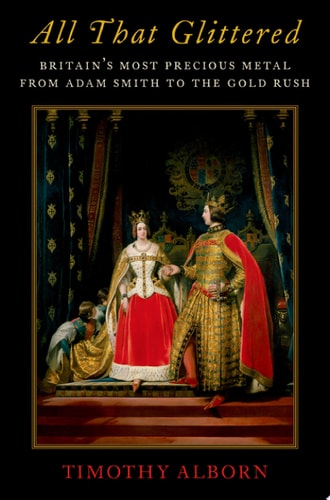
All That Glittered
0
0
As an Amazon Associate and affiliate partner, Menrva Books earns from qualifying purchases. Learn more
Author Description
During The Century After 1750, Great Britain Absorbed Much Of The World's Supply Of Gold Into Its Pockets, Cupboards, And Coffers When It Became The Only Major Country To Adopt The Gold Standard As The Sole Basis Of Its Currency. Over The Same Period, The Nation's Emergence Was Marked By A Powerful Combination Of Protestantism, Commerce, And Military Might, Alongside Preservation Of Its Older Social Hierarchy. In This Rich And Broad-ranging Work, Timothy Alborn Argues For A Close Connection Between Gold And Britain's National Identity. Beginning With Adam Smith's Wealth Of Nations, Which Validated Britain's Position As An Economic Powerhouse, And Running Through The Mid-nineteenth Century Gold Rushes In California And Australia, Alborn Draws On Contemporary Descriptions Of Gold's Value To Highlight Its Role In Financial, Political, And Cultural Realms. He Begins By Narrating British Interests In Gold Mining Globally To Enable The Smooth Operation Of The Gold Standard. In Addition To Explaining The Metal's Function In Finance, He Explores Its Uses In War Expenditure, Foreign Trade, Religious Observance, And Ornamentation At Home And Abroad. Britons Criticized Foreign Cultures For Their Wasteful And Inappropriate Uses Of Gold, Even As It Became A Prominent Symbol Of Status In More Traditional Features Of British Society, Including Its Royal Family, Aristocracy, And Military. Although Britain Had Been Ambivalent In Its Embrace Of Gold, Ultimately It Enabled The Nation To Become The World's Most Modern Economy And To Extend Its Imperial Reach Around The Globe. All That Glittered Tells The Story Of Gold As Both A Marker Of Value And A Valuable Commodity, While Providing A New Window Onto Britain's Ascendance After The 1750s.
Menrva's Summary
THE THESIS
This work investigates the central question of how gold functioned as both a foundational economic instrument and a symbolic marker of national identity in Great Britain between 1750 and the mid-nineteenth century. Timothy L. Alborn, a historian specializing in the history of economics, utilizes a broad range of primary sources, including contemporary economic texts and cultural descriptions, to argue that Britain's adoption of the gold standard was inextricably linked to its imperial expansion, social hierarchy, and religious values. The book posits that gold served as the essential mechanism for Britain's transition into a modern global economic power.
THE SCOPE MAP
What You Will Find
- Analysis of the British gold standard and its role in global financial operations.
- Examination of gold's utility in war expenditure, foreign trade, and domestic ornamentation.
- Historical survey of British interests in global gold mining, including the California and Australia gold rushes.
- Exploration of the intersection between Protestantism, commerce, and national identity.
Scope Limits
- The analysis focuses primarily on the British perspective and does not provide an exhaustive global history of gold outside of its relationship to the British Empire.
- The study concludes around the mid-nineteenth century and does not cover the later abandonment of the gold standard.
THE AUTHORITY PERSPECTIVE
Scholars and historians frequently note the depth of Alborn's research into the cultural and economic dimensions of British monetary policy. Experts highlight this as a significant contribution to understanding how material commodities shape national identity and imperial strategy.
Page Count:
320
Publication Date:
2019-01-01
Publisher:
Oxford University Press
ISBN-10:
0190603526
ISBN-13:
9780190603526
History
Finance
Cultural History
British History
Economic History
Community Tags
Similar Books