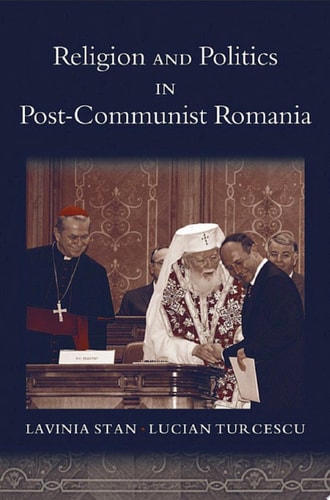
Religion and Politics in Post-Communist Romania
0
0
As an Amazon Associate and affiliate partner, Menrva Books earns from qualifying purchases. Learn more
Author Description
In the post-communist era it has become evident that the emerging democracies in Eastern Europe will be determined by many factors, only some of them political. Throughout the region, the Orthodox, Roman Catholic, and Greek Catholic churches have tried to impose their views on democracy through direct political engagement. Moreover, surveys show that the churches (and the army) enjoy more popular confidence than elected political bodies such as parliaments. These results reflect widespread disenchantment with a democratization process that has allowed politicians to advance their own agendas rather than work to solve the urgent socio-economic problems these countries face. In this penetrating study, Lavinia Stan and Lucian Turcescu investigate the interaction of religion and politics in one such country, Romania. Facing internal challenges and external competitions from other religions old and new, the Orthodox Church in Romania has sought to consolidate its position and ensure Romania's version of democracy recognizes its privileged position of "national Church", enforcing the Church's stances on issues such as homosexuality and abortion. The post-communist state and political elite in turn rely on the Church for compliance with educational and cultural policies and to quell the insistent demands of the Hungarian minority for autonomy. Stan and Turcescu examine the complex relationship between church and state in this new Romania, providing analysis in key areas: church collaboration with communist authorities, post-communist electoral politics, nationalism and ethno-politics, restitution of Greek Catholic property, religious education, and sexual behavior and reproduction. As the first scholars to be given access to confidential materials from the archives of the communist political police, the notorious Securitate, Stan and Turcescu also examine church archives, legislation, news reports, and interviews with politicians and church leaders. This study will move th
Menrva's Summary
THE THESIS
This study investigates the complex, symbiotic relationship between the Romanian Orthodox Church and the post-communist state, questioning how religious institutions influence democratic development and national identity. Lavinia Stan and Lucian Turcescu, both established scholars in political science and religious studies, utilize a combination of archival research and contemporary political analysis to map the intersection of faith and governance. By examining the Church's role in shaping social policy and the state's reliance on religious legitimacy, the authors argue that the democratization process in Romania is deeply mediated by traditional religious authority.
THE SCOPE MAP
What You Will Find
- Analysis of church collaboration with former communist authorities.
- Examination of religious influence on electoral politics and nationalism.
- Investigation into the restitution of Greek Catholic property.
- Evaluation of religious education policies and sexual health legislation.
- Primary source data from the Securitate archives and interviews with political and religious leaders.
Scope Limits
- The study focuses specifically on the Romanian context and does not provide a comparative analysis of all Eastern European nations.
- The research prioritizes the Orthodox Church's influence, providing less depth on minority religious groups outside of the Greek Catholic context.
THE AUTHORITY PERSPECTIVE
Experts recognize this work as a foundational text for understanding the intersection of religion and politics in post-1989 Romania. Readers frequently note the academic density of the prose and the significant value of the authors' unprecedented access to confidential state archives.
Page Count:
286
Publication Date:
2007-01-01
Publisher:
Oxford University Press
ISBN-10:
0190208503
ISBN-13:
9780190208509
Religion
History
Eastern Orthodox
European History
Church & State
Sociology
Politics & Government
Romania
Community Tags
Other Editions(4)

Similar Books








Reader Comments
Share Your Thoughts
No comments yet. Be the first to share your thoughts!