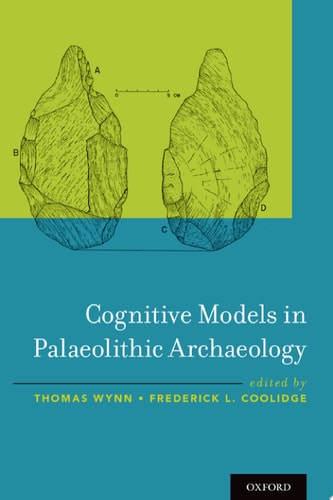
Cognitive Models in Palaeolithic Archaeology
0
0
As an Amazon Associate and affiliate partner, Menrva Books earns from qualifying purchases. Learn more
Author Description
How did human thought evolve into the highly complex process it is today? In the field of evolutionary cognitive archaeology, cognitive science and archaeology intersect to provide a more complete and grounded picture of the mind. With the combination of cognitive theories and archaeological evidence, this burgeoning field is only beginning to tap into the potential for a better understanding of the development of specific cognitive abilities.Cognitive Models in Palaeolithic Archaeology explores hominin cognitive development by applying formal cognitive models to analyze prehistoric remains from the entire range of the Palaeolithic, from the earliest stone tools 3.3 million years ago to artistic developments that emerged 50,000 years ago. Several different cognitive models are presented, including expert cognition, information processing, material engagement theory, embodied/extended cognition, neuroaesthetics, visual resonance theory, theory of mind, and neuronal recycling. By examining archaeological remains, and thereby past activities and behavior, through the grounded lenses of these models, a mosaic pattern of human cognitive evolution emerges. This volume, authored by many leading authorities in the field of cognitive archaeology, will attract scholars and students of cognitive evolution and paleoanthropology, who will find a new understanding of hominin cognitive evolution and substantive conclusions about our hominin evolution as opportunities for further research.
Menrva's Summary
THE THESIS
How did human thought evolve into the highly complex process it is today? Frederick L. Coolidge and Thomas Grant Wynn present a comprehensive framework that bridges cognitive science and archaeology to interpret the development of the human mind. By applying formal cognitive models to prehistoric remains, the authors argue that human cognitive evolution is best understood through a mosaic of specific, grounded behavioral evidence.
THE SCOPE MAP
What You Will Find
- Analysis of hominin cognitive development from 3.3 million years ago to 50,000 years ago.
- Application of specific models including expert cognition, information processing, material engagement theory, and neuroaesthetics.
- Examination of archaeological remains as proxies for past activities and behavioral patterns.
Scope Limits
- The text focuses primarily on the Palaeolithic era and does not extend into the Neolithic or subsequent historical periods.
- It does not provide a singular, unified theory of mind but rather a collection of diverse, sometimes competing, cognitive models.
THE AUTHORITY PERSPECTIVE
Experts recognize this volume as a significant collection of interdisciplinary research that formalizes the methodology of cognitive archaeology. Readers frequently note the academic density of the prose, which serves as a specialized resource for scholars and students of paleoanthropology.
Page Count:
240
Publication Date:
2016-11-14
Publisher:
Oxford University Press
ISBN-10:
0190204117
ISBN-13:
9780190204112
Archaeology
Prehistoric peoples
Cognition
Evolutionary Anthropology
Paleoanthropology
Psychology Comparative
Cognition and culture
Cognitive Archaeology
Community Tags
Similar Books