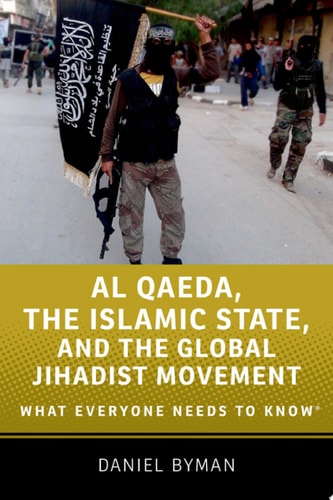
Al Qaeda, The Islamic State, And The Global Jihadist Movement: What Everyone Needs To Know
0
0
As an Amazon Associate and affiliate partner, Menrva Books earns from qualifying purchases. Learn more
Author Description
On The Morning Of September 11, 2001, The Entire World Was Introduced To Al Qaeda And Its Enigmatic Leader, Osama Bin Laden. But The Organization That Changed The Face Of Terrorism Forever And Unleashed A Whirlwind Of Counterterrorism Activity And Two Major Wars Had Been On The Scene Long Before That Eventful Morning. In Al Qaeda, The Islamic State, And The Global Jihadist Movement: What Everyone Needs To Know, Daniel L. Byman, An Eminent Scholar Of Middle East Terrorism And International Security Who Served On The 9/11 Commission, Provides A Sharp And Concise Overview Of Al Qaeda, From Its Humble Origins In The Mountains Of Afghanistan To The Present, Explaining Its Perseverance And Adaptation Since 9/11 And The Limits Of U.s. And Allied Counterterrorism Efforts. The Organization That Would Come To Be Known As Al Qaeda Traces Its Roots To The Anti-soviet Jihad In Afghanistan In The 1980s. Founded As The Soviets Withdrew From Afghanistan, Al Qaeda Achieved A Degree Of International Notoriety With A Series Of Spectacular Attacks In The 1990s; However, It Was The Dramatic Assaults On The World Trade Center And The Pentagon On 9/11 That Truly Launched Al Qaeda Onto The Global Stage. The Attacks Endowed The Organization With World-historical Importance And Provoked An Overwhelming Counterattack By The United States And Other Western Countries. Within A Year Of 9/11, The Core Of Al Qaeda Had Been Chased Out Of Afghanistan And Into A Variety Of Refuges Across The Muslim World. Splinter Groups And Franchised Offshoots Were Active In The 2000s In Countries Like Pakistan, Iraq, And Yemen, But By Early 2011, After More Than A Decade Of Relentless Counterterrorism Efforts By The United States And Other Western Military And Intelligence Services, Most Felt That Al Qaeda's Moment Had Passed. With The Death Of Osama Bin Laden In May Of That Year, Many Predicted That Al Qaeda Was In Its Death Throes. Shockingly, Al Qaeda Has Staged A Remarkable Comeback In The Last Few Years.
Menrva's Summary
THE THESIS
This book investigates the historical evolution, organizational resilience, and strategic adaptation of Al Qaeda and the Islamic State within the broader context of the global jihadist movement. Daniel L. Byman, a senior fellow at the Brookings Institution and former 9/11 Commission staffer, utilizes his extensive background in international security to analyze how these groups have survived decades of counterterrorism pressure. The work argues that despite significant military setbacks and the death of key leadership, the movement has demonstrated a persistent capacity to decentralize, franchise, and re-emerge in new regional theaters.
THE SCOPE MAP
What You Will Find
- Historical analysis of the anti-Soviet jihad in Afghanistan during the 1980s.
- Examination of the organizational shift from a centralized core to a network of regional offshoots.
- Assessment of U.S. and allied counterterrorism strategies and their long-term effectiveness.
Scope Limits
- The text does not provide a comprehensive tactical manual for intelligence operations.
- It does not cover every minor splinter group in exhaustive detail, focusing instead on major organizational trends.
THE AUTHORITY PERSPECTIVE
Experts recognize this work as a highly accessible and authoritative primer for students and policy professionals seeking to understand the complexities of modern jihadist movements. Readers frequently note that the prose is clear and well-structured, making dense geopolitical history digestible for a general audience.
Page Count:
240
Publication Date:
2015-01-01
Publisher:
Oxford University Press
ISBN-10:
0190217278
ISBN-13:
9780190217273
History
International relations
Military History
Middle East
Terrorism
Community Tags
Other Editions(2)
Similar Books








Reader Comments
Share Your Thoughts
No comments yet. Be the first to share your thoughts!