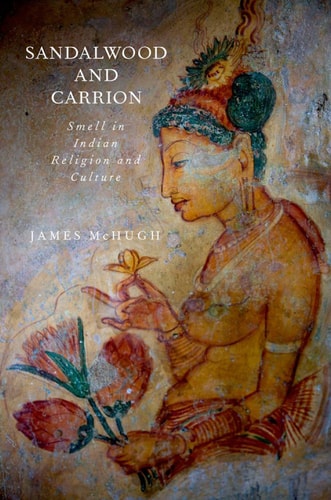
Sandalwood and Carrion: Smell in Indian Religion and Culture
0
0
As an Amazon Associate and affiliate partner, Menrva Books earns from qualifying purchases. Learn more
Author Description
James McHugh offers the first comprehensive examination of the concepts and practices related to smell in pre-modern India. Drawing on a wide range of textual sources, from poetry to medical texts, he shows the significant religious and cultural role of smell in India throughout the first millennium CE.McHugh describes the arts of perfumery developed in royal courts, temples, and monasteries, which were connected to a trade in exotic aromatics. Through their transformative nature, perfumes played an important part in every aspect of Indian life from seduction to diplomacy and religion. The aesthetics of smell dictated many of the materials, practices, and ceremonies associated with India's religious culture. McHugh shows how religious discourses on the purpose of life emphasized the pleasures of the senses, including olfactory experience, as valid ends in themselves. Fragrances and stenches were analogous to certain values, aesthetic or ethical, and in a system where karmic results often had a sensory impact-where evil literally stank-the ethical and aesthetic became difficult to distinguish. Through the study of smell, McHugh strengthens our understanding of the vital connection between the theological and the physical world.Sandalwood and Carrion explores smell in pre-modern India from many perspectives, covering such topics as philosophical accounts of smell perception, odors in literature, the history of perfumery in India, the significance of sandalwood in Buddhism, and the divine offering of perfume to the gods.
Menrva's Summary
THE THESIS
This book investigates the complex religious, cultural, and aesthetic roles of olfactory experience in pre-modern India. James McHugh, an expert in South Asian studies, synthesizes a diverse array of primary sources—ranging from classical Sanskrit poetry and medical treatises to religious texts—to construct a framework for understanding how smell functioned as a bridge between the physical and theological realms. He argues that in the Indian context of the first millennium CE, sensory perception was not merely a biological function but a sophisticated system of ethical and aesthetic classification.
THE SCOPE MAP
What You Will Find
- Historical analysis of the perfumery trade in royal courts and religious institutions.
- Philosophical and medical accounts of olfactory perception in pre-modern Indian thought.
- Examination of the symbolic significance of sandalwood and other aromatics in Buddhist and Hindu rituals.
- Exploration of the intersection between karmic ethics and sensory experience, where moral states were often characterized by specific odors.
THE AUTHORITY PERSPECTIVE
Scholars and historians recognize this work as a foundational study in the sensory history of South Asia. Readers frequently note the academic density of the prose, which provides a rigorous and detailed examination of previously overlooked cultural practices.
Page Count:
326
Publication Date:
2012-01-01
Publisher:
Oxford University Press
ISBN-10:
0199996245
ISBN-13:
9780199996247
Religion
Philosophy
History
Odors
India religion
India
Asian History
Smell
Special Topics
Anthropology
Community Tags
Similar Books