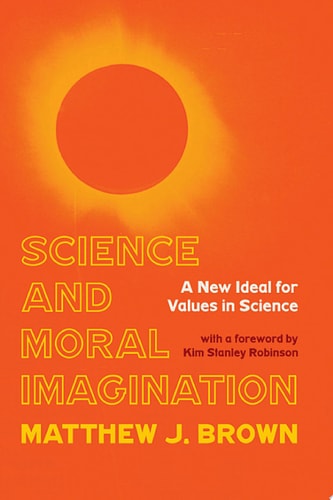
Science and Moral Imagination
0
0
As an Amazon Associate and affiliate partner, Menrva Books earns from qualifying purchases. Learn more
Author Description
The idea that science is or should be value-free, and that values are or should be formed independently of science, has been under fire by philosophers of science for decades. Science and Moral Imagination directly challenges the idea that science and values cannot and should not influence each other. Matthew J. Brown argues that science and values mutually influence and implicate one another, that the influence of values on science is pervasive and must be responsibly managed, and that science can and should have an influence on our values. This interplay, he explains, must be guided by accounts of scientific inquiry and value judgment that are sensitive to the complexities of their interactions. Brown presents scientific inquiry and value judgment as types of problem-solving practices and provides a new framework for thinking about how we might ethically evaluate episodes and decisions in science, while offering guidance for scientific practitioners and institutions about how they can incorporate value judgments into their work. His framework, dubbed “the ideal of moral imagination,” emphasizes the role of imagination in value judgment and the positive role that value judgment plays in science.
Menrva's Summary
THE THESIS
This book investigates the complex and often contentious relationship between scientific inquiry and moral values. Matthew J. Brown challenges the long-held notion that science and values are, or should be, separate domains. He argues for a pervasive and necessary mutual influence, asserting that values shape scientific practice and that science, in turn, can and should inform our moral frameworks. The book proposes a new model for ethical evaluation within science, emphasizing the critical role of imagination in navigating these interactions.
THE SCOPE MAP
- A philosophical argument for the integration of science and values.
- A framework for ethically evaluating scientific inquiry and value judgments.
- Exploration of the concept of 'moral imagination' in scientific practice.
- Guidance for scientific practitioners and institutions on incorporating value judgments.
THE AUTHORITY PERSPECTIVE
The book presents a novel framework for understanding the interplay between science and values, positioning them as mutually influential problem-solving practices. It emphasizes the role of imagination in ethical decision-making within scientific contexts and offers practical guidance for researchers and institutions. The work is likely to appeal to philosophers of science, ethicists, and scientists interested in the ethical dimensions of their work.
Page Count:
269
Publication Date:
2020-11-17
Publisher:
University of Pittsburgh Press
ISBN-10:
0822987678
ISBN-13:
9780822987673
Philosophy
Science
Non-Fiction
Ethics
Community Tags
Similar Books