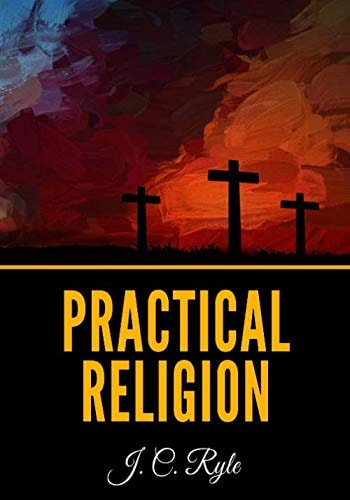
Practical Religion
0
0
As an Amazon Associate and affiliate partner, Menrva Books earns from qualifying purchases. Learn more
Author Description
Let us go again and visit our brethren, and see how they do." This was a wise and useful proposal. Let us lay it to heart, and apply it to ourselves in the nineteenth century. Let us search our ways, and find out how matters stand between ourselves and God. Let us "see how we do." I ask every reader of this volume to begin its perusal by joining me in self-inquiry. If ever self-inquiry about religion was needed, it is needed at the present day. We live in an age of peculiar spiritual privileges. Since the world began there never was such an opportunity for a man's soul to be saved as there is in England at this time. There never were so many signs of religion in the land, so many sermons preached, so many services held in churches and chapels, so many Bibles sold, so many religious books and tracts printed, so many Societies for evangelizing mankind supported, so much outward respect paid to Christianity. Things are done everywhere now-a-days which a hundred years ago would have been thought impossible. Bishops support the boldest and most aggressive efforts to reach the unconverted. Deans and Chapters throw open the naves of cathedrals for Sunday evening sermons! Clergy of the narrowest High Church School advocate special missions, and vie with their Evangelical brethren in proclaiming that going to church on Sunday is not enough to take a man to heaven. In short, there is a stir about religion now-a-days to which there has been nothing like since England was a nation, and which the cleverest sceptics and infidels cannot deny. If Romaine, and Venn, and Berridge, and Rowlands, and Grimshaw, and Hervey, had been told that such things would come to pass about a century after their deaths, they would have been tempted to say, with the Samaritan nobleman,—"If the Lord should make windows of heaven might such a thing be." (2 Kings vii. 19.) But the Lord has opened the windows of heaven. There is more taught now-a-days in England of the real Gospel, and
Menrva's Summary
THE THESIS
This volume investigates the state of personal faith and religious practice in the 19th century, urging readers toward introspection and a critical examination of their spiritual lives. J. C. Ryle, a prominent evangelical Anglican bishop, draws upon his extensive pastoral experience and knowledge of religious movements to address the unique spiritual opportunities and challenges of his era. He argues that despite outward displays of religious activity and societal respect for Christianity, a deeper, more genuine personal commitment is essential for salvation. The book is structured as a call to self-inquiry, encouraging readers to assess the sincerity and depth of their relationship with God.
THE SCOPE MAP
- An examination of the spiritual landscape of 19th-century England, highlighting its peculiar privileges and potential pitfalls.
- A strong emphasis on self-inquiry and personal examination of one's faith and relationship with God.
- Discussions on the outward signs of religion versus the inward reality of spiritual commitment.
- Historical context referencing religious figures and movements from previous centuries.
- A call to action for readers to assess the sincerity of their religious beliefs and practices.
THE AUTHORITY PERSPECTIVE
This work is characteristic of J. C. Ryle's direct and pastoral style, aimed at encouraging earnest self-reflection among his readers. The text reflects the evangelical fervor and concerns of the Victorian era, emphasizing the importance of genuine personal faith over mere outward observance. Ryle's clear prose and practical approach likely resonated with a broad audience seeking guidance on their spiritual journey. The book serves as a timeless exhortation to examine one's heart and commitment to religious principles.
Page Count:
197
Publication Date:
2019-12-07
Publisher:
Independently published
ISBN-10:
1672537053
ISBN-13:
9781672537056
Spirituality
Self-help
Non-Fiction
Religion
Theology
Christianity
Community Tags
Other Editions(2)

Similar Books






Reader Comments
Share Your Thoughts
No comments yet. Be the first to share your thoughts!