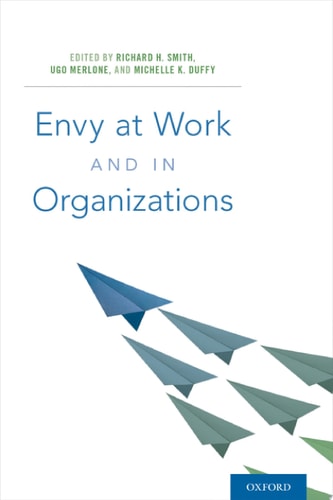
Envy at Work and in Organizations
0
0
As an Amazon Associate and affiliate partner, Menrva Books earns from qualifying purchases. Learn more
Author Description
Competition for resources, recognition, and favorable outcomes are all facts of life in professional settings. When one falls short in comparison to colleagues or subordinates, feelings of envy may arise. Fueled by inferiority, hostility and resentment, envy is both ubiquitous and painful. Will employees "level up" with their envied counterpart through self-improvement behaviors? Or will they "level down" through sabotage and undermine their peers and subordinates in the process?Envy at Work and in Organizations aims to determine the direction workplace envy takes. Contributors are drawn from many countries and from an extraordinary range of disciplines to share their insight: experimental social psychologists offer insights from lab studies, psychoanalytical scholars emphasize unconscious processes, organizational psychologists describe groundbreaking research from disparate work settings, and cross-cultural psychologists reveal the variety of ways that envy can emerge as a function of cultures as wide-ranging as the Japanese school system to the fascinating structure of the Israeli kibbutzim. Work and insight from behavioral economists and organizational consultants is also included.Envy at Work and in Organizations is a valuable, distinctive resource for both scholars and practitioners looking to grasp the nature of envy. Edited by Richard H. Smith, Ugo Merlone, and Michelle K. Duffy, this volume will help readers understand the factors that help individuals and organizations overcome envy and transform it into something positive to promote workplace well-being.
Menrva's Summary
THE THESIS
This volume investigates the psychological mechanisms and organizational consequences of envy within professional environments, specifically examining how individuals respond to perceived disparities in status or resources. The editors, Michelle K. Duffy, Richard H. Smith, and Ugo Merlone, curate a multidisciplinary collection of research that explores whether envy triggers constructive self-improvement or destructive sabotage. By synthesizing perspectives from social psychology, behavioral economics, and organizational theory, the text provides a framework for understanding how envy functions as a catalyst for either professional growth or organizational decline.
THE SCOPE MAP
What You Will Find
- Comparative analysis of workplace envy across diverse cultural systems including Japanese schools and Israeli kibbutzim.
- Theoretical models distinguishing between benign and malicious envy in professional settings.
- Empirical data derived from experimental lab studies and organizational field research.
- Strategies for management to mitigate toxic envy and foster positive workplace well-being.
Scope Limits
- The text does not provide a singular, universal solution for eliminating envy, as it acknowledges the emotion as an inherent byproduct of competitive structures.
- It does not focus on personal therapeutic interventions outside of the organizational context.
THE AUTHORITY PERSPECTIVE
Experts identify this volume as a comprehensive, multidisciplinary resource for organizational scholars and practitioners. Readers frequently note the academic density of the prose, which effectively bridges the gap between theoretical psychological research and practical management applications.
Page Count:
544
Publication Date:
2016-09-01
Publisher:
Oxford University Press
ISBN-10:
0190228059
ISBN-13:
9780190228057
Business
Envy
Psychology Industrial
Management
Workplace Dynamics
Community Tags
Other Editions(3)
Similar Books














Reader Comments
Share Your Thoughts
No comments yet. Be the first to share your thoughts!