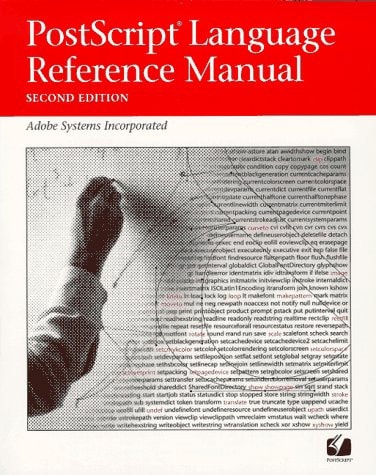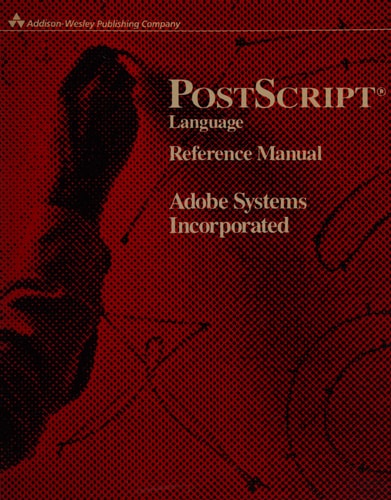
PostScript Language Reference Manual
0
0
As an Amazon Associate and affiliate partner, Menrva Books earns from qualifying purchases. Learn more
Author Description
Programmers who specialize in PostScript, the page-description language, now have a newly updated reference guide for LanguageLevel 3. PostScript Language Reference starts off with a bit of history on the language and an overview of the new version. It goes on to cover basic topics such as raster output devices, scan conversion, and page-description languages in general. PostScript Language Reference provides an overview of how to use the PostScript interpreter and understand the ideal structure of PostScript page descriptions. The book covers the heart of the language, including syntax, data types and objects, stacks, execution, basic operators, memory management, file input/output (I/O), functions, errors, and filtered-files and binary-encoding details. Subsequent chapters cover graphics, fonts, device control, rendering, and operators.The appendices include a LanguageLevel feature summary, implementation limits, interpreter parameters, compatibility issues, character sets, encoding vectors, system-name encodings, and operator-usage guidelines. There's also a bibliography with additional reading recommendations. --Kathleen Caster
Menrva's Summary
THE THESIS
This manual serves as the definitive technical reference for the PostScript LanguageLevel 3, providing a comprehensive framework for developers to understand and implement the page-description language. Adobe Systems Inc, the creators of the PostScript standard, compiled this guide to detail the syntax, operational logic, and memory management protocols required for professional output device programming. The text functions as both a historical overview and a rigorous instructional resource for managing complex graphics, fonts, and rendering processes.
THE SCOPE MAP
What You Will Find
- Detailed specifications for LanguageLevel 3 syntax, data types, and object structures.
- Technical documentation on memory management, file input/output, and binary-encoding procedures.
- Comprehensive coverage of graphics, font rendering, and device control operators.
- Extensive appendices covering implementation limits, interpreter parameters, and character encoding vectors.
THE AUTHORITY PERSPECTIVE
Experts and software engineers recognize this volume as the foundational text for anyone working with PostScript interpreters. Readers frequently note the high level of technical density, which makes it a necessary resource for advanced implementation rather than casual learning.
Page Count:
299
Publication Date:
1986-01-01
Publisher:
Adobe Press
ISBN-10:
0201101696
ISBN-13:
9780201101690
Computer Science
Programming
Desktop Publishing
Reference
Graphics & Design