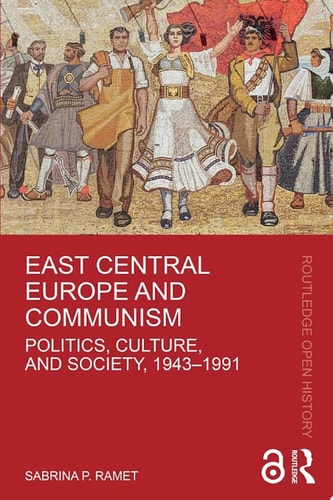
East Central Europe and Communism: Politics, Culture, and Society, 1943–1991
0
0
As an Amazon Associate and affiliate partner, Menrva Books earns from qualifying purchases. Learn more
Author Description
The communists of East Central Europe came to power promising to bring about genuine equality, paying special attention to achieving gender equality, to build up industry and create prosperous societies, and to use music, art, and literature to promote socialist ideals. Instead, they never succeeded in filling more than a third of their legislatures with women and were unable to make significant headway against entrenched patriarchal views; they considered it necessary (with the sole exception of Albania) to rely heavily on credits to build up their economies, eventually driving them into bankruptcy; and the effort to instrumentalize the arts ran aground in most of the region already by 1956, and, in Yugoslavia, by 1949. Communism was all about planning, control, and politicization. Except for Yugoslavia after 1949, the communists sought to plan and control not only politics and the economy, but also the media and information, religious organizations, culture, and the promotion of women, which they understood in the first place as involving putting women to work. Inspired by the groundbreaking work of Robert K. Merton on functionalist theory, this book shows how communist policies were repeatedly undermined by unintended consequences and outright dysfunctions.
Menrva's Summary
THE THESIS
This book investigates the complex and often contradictory outcomes of communist rule in East Central Europe between 1943 and 1991. The communist regimes promised equality, industrial development, and the promotion of socialist ideals through the arts, yet they struggled to achieve gender equality, relied heavily on foreign credit leading to economic instability, and found their attempts to control culture faltering. The book examines how communist policies, aiming for comprehensive planning and control over politics, economy, media, religion, and culture, were frequently undermined by unintended consequences and dysfunctions, drawing inspiration from Robert K. Merton's functionalist theory.
THE SCOPE MAP
- The implementation and outcomes of communist policies in East Central Europe from 1943 to 1991.
- Analysis of the pursuit of gender equality and its limitations within communist societies.
- Examination of economic development strategies, including reliance on credits and resulting bankruptcies.
- The role and instrumentalization of music, art, and literature under communist regimes.
- The extent of communist planning and control over politics, economy, media, information, religious organizations, and culture.
- The application of functionalist theory, inspired by Robert K. Merton, to understand unintended consequences of communist policies.
- Comparative analysis of communist experiences across different countries in East Central Europe, with a specific mention of Yugoslavia and Albania.
THE AUTHORITY PERSPECTIVE
Drawing on functionalist theory, this book analyzes the gap between communist promises and their actual outcomes in East Central Europe. It highlights how policies aimed at equality, economic growth, and cultural control frequently led to unintended dysfunctions and failures. The work likely appeals to scholars and students of modern European history, political science, and sociology, offering a critical perspective on the communist era.
Page Count:
358
Publication Date:
2023-03-23
Publisher:
Taylor & Francis
ISBN-10:
1000877124
ISBN-13:
9781000877120
Non-Fiction
Politics
History
Social Science
Social History
Community Tags
Similar Books