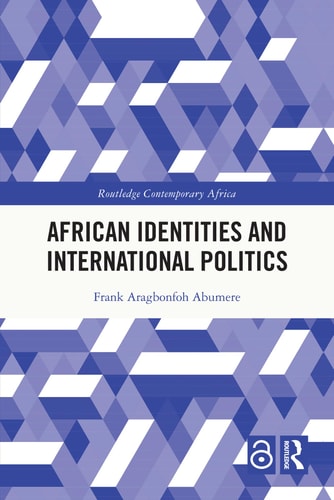
African Identities and International Politics
0
0
As an Amazon Associate and affiliate partner, Menrva Books earns from qualifying purchases. Learn more
Author Description
Using the lenses of realism, liberalism, the English School and constructivism, this book explains how the divisions and differences in African identities affect African international politics. This book explores the African condition in the twenty-first century. It analyses how geographical, racial, ethnic, linguistic, religious and power differences shape continental and intercontinental relations in Africa through the creation of identities and values which militate against intra-continental or regional relations. The author assesses inclusionary and exclusionary, rational and irrational relationships, interactions and non-interactions which occur between geographical, linguistic, racial and religious entities in Africa. He suggests that, in these moments, one entity will negatively relate, interact or refuse to interact with another entity for the gains of the former and to the detriment of the latter, or even to the detriment of both entities. Examining the possibility of creating identities and values that can unite Africa as a continent and Africans as a people, this book will be of interest to scholars of African politics, international relations and political theory
Menrva's Summary
THE THESIS
This book investigates how diverse African identities shape the continent's international political landscape. The author, Frank Aragbonfoh Abumere, utilizes theoretical lenses of realism, liberalism, the English School, and constructivism to analyze the complex interplay of geographical, racial, ethnic, linguistic, and religious differences. It examines how these divisions foster both inclusionary and exclusionary relationships, often leading to interactions that benefit one entity at the expense of others, or even both. The work critically assesses the potential for forging unifying identities and values across Africa.
THE SCOPE MAP
- Analysis of African international politics through the frameworks of realism, liberalism, the English School, and constructivism.
- Exploration of the 'African condition' in the 21st century, focusing on identity formation.
- Examination of how geographical, racial, ethnic, linguistic, and religious differences impact continental and intercontinental relations.
- Assessment of inclusionary and exclusionary, rational and irrational relationships between various African entities.
- Discussion on how identity-based divisions can lead to detrimental interactions or non-interactions for mutual or unilateral gain.
- Consideration of the possibility of creating unifying identities and values to foster continental cohesion.
THE AUTHORITY PERSPECTIVE
The book is positioned as a significant contribution to the study of African politics, international relations, and political theory. Its analytical approach, employing multiple theoretical frameworks, suggests a text aimed at scholars and students seeking a deep understanding of the complexities of identity in shaping African international relations. The examination of both divisive and potentially unifying identity factors indicates a nuanced perspective on the continent's political dynamics.
Page Count:
160
Publication Date:
2024-05-01
Publisher:
Routledge, Taylor & Francis Group
ISBN-10:
1032010045
ISBN-13:
9781032010045
History
Politics
Non-Fiction
Identity politics
Sociology
Identity Studies
Political Theory
International relations
Community Tags
Other Editions(5)


Similar Books

Reader Comments
Share Your Thoughts
No comments yet. Be the first to share your thoughts!