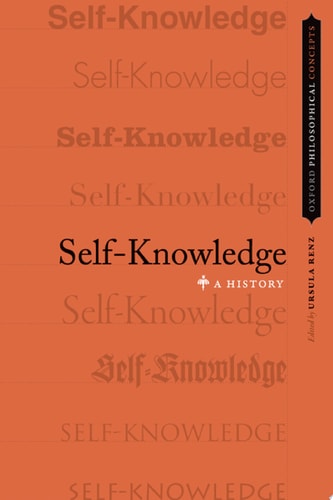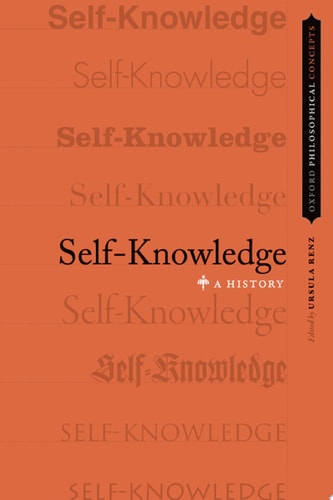
Self-Knowledge: A History
0
0
As an Amazon Associate and affiliate partner, Menrva Books earns from qualifying purchases. Learn more
Author Description
The acquisition of self-knowledge is often described as one of the main goals of philosophical inquiry. At the same time, some sort of self-knowledge is often regarded as a necessary condition of our being a human agent or human subject. Thus self-knowledge is taken to constitute both the beginning and the end of humans' search for wisdom, and as such it is intricately bound up with the very idea of philosophy. Not surprisingly therefore, the Delphic injunction 'Know thyself' has fascinated philosophers of different times, backgrounds, and tempers.But how can we make sense of this imperative? What is self-knowledge and how is it achieved? What are the structural features that distinguish self-knowledge from other types of knowledge? What role do external, second- and third-personal, sources of knowledge play in the acquisition of self-knowledge? How can we account for the moral impact ascribed to self-knowledge? Is it just a form of anthropological knowledge that allows agents to act in accordance with their aims? Or, does self-knowledge ultimately ennoble the self of the subjects having it? Finally, is self-knowledge, or its completion, a goal that may be reached at all?The book addresses these questions in fifteen chapters covering approaches of many philosophers from Plato and Aristotle to Edmund Husserl or Elisabeth Anscombe. The short reflections inserted between the chapters show that the search for self-knowledge is an important theme in literature, poetry, painting and self-portraiture from Homer.
Menrva's Summary
THE THESIS
This volume investigates the historical evolution and philosophical significance of the Delphic injunction to 'know thyself' across diverse intellectual traditions. Ursula Renz, a scholar specializing in the history of philosophy, curates a collection of essays that examine how self-knowledge functions as both a prerequisite for human agency and a terminal goal of wisdom. The text utilizes a chronological framework to analyze how various thinkers have defined the structural, moral, and epistemological dimensions of the self.
THE SCOPE MAP
What You Will Find
- Historical analysis of self-knowledge from Plato and Aristotle to Husserl and Anscombe
- Examination of the role of external, second-personal, and third-personal sources in self-understanding
- Interdisciplinary reflections on self-knowledge in literature, poetry, and visual arts
- Philosophical inquiry into the moral impact and potential limits of self-knowledge
Scope Limits
- The text does not provide a singular, unified theory of self-knowledge but rather a historical survey of competing perspectives
- It does not focus on contemporary psychological or neuroscientific models of self-awareness
THE AUTHORITY PERSPECTIVE
Experts recognize this volume as a comprehensive resource for understanding the historical trajectory of self-knowledge within Western philosophy. Readers frequently note the academic density of the prose, which serves as a rigorous examination of complex philosophical concepts for advanced students and scholars.
Page Count:
350
Publication Date:
2016-12-05
Publisher:
Oxford University Press
ISBN-10:
0190226420
ISBN-13:
9780190226428
Non-Fiction
Philosophy
Philosophy history
Epistemology
Self Philosophy
Ethics
Community Tags
Similar Books