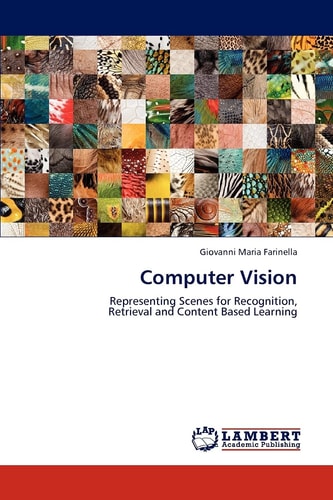
Computer Vision
0
0
As an Amazon Associate and affiliate partner, Menrva Books earns from qualifying purchases. Learn more
Author Description
Vision is perhaps the most important sense for humans. It consists of processing images of scenes so as to make explicit what needs to be known about them. Among the different complex tasks accomplished by the Human Visual System, the tasks of representing and understanding the content of an observed scene are fundamental; these tasks, indeed, allow to humans the interpretation of their surroundings. Computer vision aims to build robust and reusable vision systems that act taking into account the visual content of images and videos. Just as learning is an essential component of biological visual systems, the design of machine vision systems that learn and adapt represent an important challenge in modern computer vision research. This book focuses on some key ingredients useful to represent images for scene recognition, image retrieval and content based learning.
Menrva's Summary
THE THESIS
This book explores the fundamental principles and challenges in building computer vision systems that can interpret and understand visual information. It delves into the critical components required for representing images to enable scene recognition, image retrieval, and content-based learning, emphasizing the growing importance of machine learning and adaptive systems in modern computer vision research.
THE SCOPE MAP
- Key ingredients for image representation in computer vision.
- Techniques for scene recognition.
- Methods for image retrieval.
- Concepts of content-based learning.
- The role of machine learning in adaptive vision systems.
THE AUTHORITY PERSPECTIVE
The book addresses core aspects of computer vision, focusing on image representation for recognition and retrieval tasks. It highlights the integration of machine learning as a crucial element for developing adaptive vision systems. The content appears geared towards researchers and students interested in the foundational elements of visual scene understanding.
Page Count:
196
Publication Date:
2011-10-01
Publisher:
Lap Lambert Academic Publishing GmbH KG
ISBN-10:
3846519197
ISBN-13:
9783846519196
Non-Fiction
Science
Computer Science
Machine Learning
Image Processing
Community Tags
Similar Books