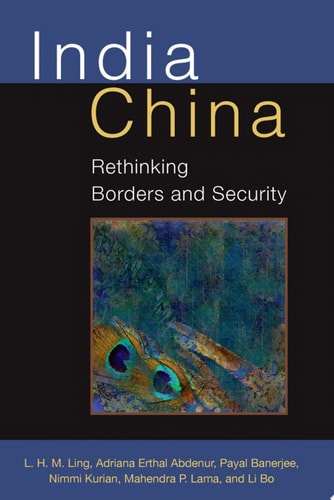
India China: Rethinking Borders and Security
0
0
As an Amazon Associate and affiliate partner, Menrva Books earns from qualifying purchases. Learn more
Author Description
Challenging the Westphalian view of international relations, which focuses on the sovereignty of states and the inevitable potential for conflict, the authors from the Borderlands Study Group reconceive borders as capillaries enabling the flow of material, cultural, and social benefits through local communities, nation-states, and entire regions. By emphasizing local agency and regional interdependencies, this metaphor reconfigures current narratives about the China India border and opens a new perspective on the long history of the Silk Roads, the modern BCIM Initiative, and dam construction along the Nu River in China and the Teesta River in India. Together, the authors show that positive interaction among people on both sides of a border generates larger, cross-border communities, which can pressure for cooperation and development.
Menrva's Summary
THE THESIS
This book challenges conventional understandings of borders and security by proposing a new conceptualization of borders as dynamic conduits rather than static barriers. The authors, drawing from the Borderlands Study Group, argue against the Westphalian view of inevitable conflict, instead presenting borders as
THE SCOPE MAP
- A redefinition of borders as 'capillaries' facilitating the flow of benefits.
- Analysis of the China-India border through the lens of local agency and regional interdependencies.
- Exploration of the historical Silk Roads and the modern BCIM Initiative.
- Case studies on dam construction along the Nu River in China and the Teesta River in India.
- Examination of how positive cross-border interactions foster cooperation and development.
THE AUTHORITY PERSPECTIVE
The book offers a novel perspective on border studies, moving away from conflict-centric models to emphasize the cooperative potential inherent in border regions. By focusing on local agency and interdependencies, it provides a framework for understanding how cross-border communities can emerge and influence policy. The authors' reconceptualization of borders as 'capillaries' suggests a more fluid and beneficial role for these zones in international relations. This approach opens new avenues for research into regional cooperation and development, particularly in the context of Asia.
Page Count:
190
Publication Date:
2016-09-19
Publisher:
University of Michigan Press
ISBN-10:
0472902520
ISBN-13:
9780472902521
Non-Fiction
Politics
History
International relations
Border Studies
Geopolitics
Security Studies
Asian Studies
Community Tags
Similar Books